
The 2016 International Exhibition Industry CEO Shanghai Summit, held from January 11 to 12, 2016, took market orientation and international competitiveness as its theme and included five topics.
The second forum was held on the afternoon of January 11. The topic was Rebuilding the Strategic Goals of Exhibition Organizers under the Economic New Normal.
Over the past thirty years, China's economy maintained rapid growth thanks to the three engines of investment, exports and consumption. But the normal conditions to which people had become accustomed are now facing profound challenges. Domestic and international economic conditions have changed significantly, and China's economic growth is shifting to a medium-high speed. Against the background of the new normal, economic restructuring and industrial upgrading have created new demands for the convention and exhibition industry and exhibition enterprises, and traditional ways of doing business may undergo major change.
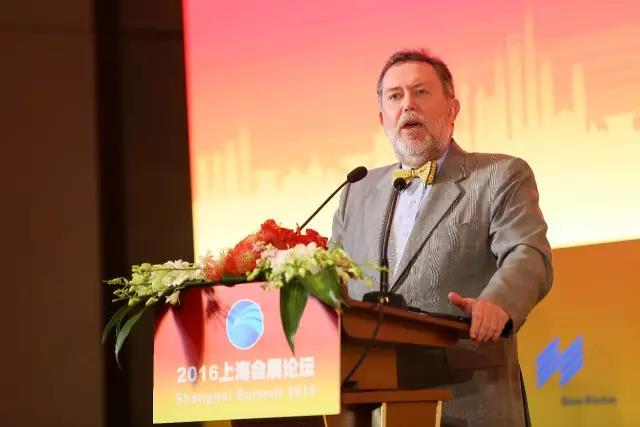
This topic was moderated by Paul Woodward, president of Paul Woodward Consulting. There were six speakers. They shared with the audience how organizers can focus on their own strengths and weaknesses, formulate medium- and long-term strategic plans through market positioning, and improve core competitiveness in exhibition concepts, management experience and professional skills.
4. Key Points from the Speech by Gu Chunting, chairman and president of Shanghai International Exhibition Co., Ltd.
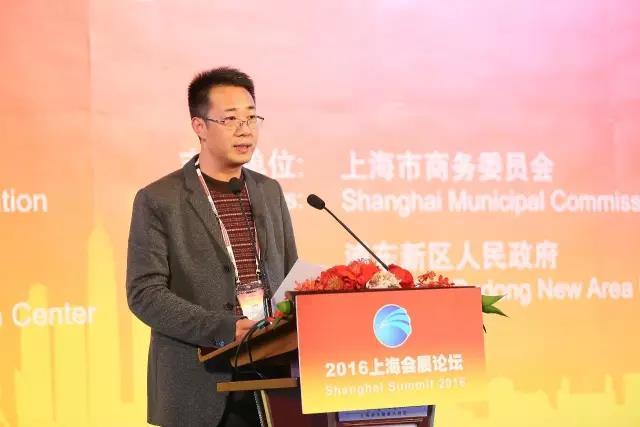
I. Five views on the new normal of Shanghai's exhibition economy
1. The parallel strategy formed by the two major venues in Pudong and Puxi will become a new normal for Shanghai's exhibition industry. The development scale of Shanghai's exhibition industry is fully capable of keeping the two venues in Pudong and Puxi at relatively high rental rates, which meets the development needs of Shanghai as an international exhibition capital.
2. Stronger government guidance for Shanghai's exhibition industry, fewer administrative approvals, and fewer government-run exhibitions will become the new normal in government-enterprise relations. To this end, Shanghai will further improve the legal environment, establish cross-department coordination mechanisms and public service platforms, encourage new formats and models, and strengthen guidance for the exhibition industry. It can be expected that Shanghai's exhibition environment will continue to improve and its development space will continue to expand.
3. Market competition is becoming increasingly intense, and the phenomenon of repeated exhibitions will continue for a relatively long time. Intense market competition will drive the survival of the fittest among Shanghai exhibition projects, and good projects will continue to grow.
4. Integration of information technology and the exhibition industry, online-offline combination, and quality improvement will become the key to winning. Information technology companies, like transport and construction companies, will become indispensable members of the exhibition industry chain. Generally speaking, exhibition companies do not have professional advantages in information technology, so some services should be outsourced to reduce costs while quickly reaching the forefront among similar exhibitions.
5. Capital penetration into the exhibition industry is an inevitable trend. Capital plus concepts will promote industry progress. Capital pursues profit. If exhibitions fluctuate greatly and the market is fragmented without monopoly characteristics, sustained high growth is hard to ensure. Therefore, I believe the future changes brought by capital to the exhibition industry still need further observation. Of course, once capital, concepts, models and technologies are combined, they will greatly change the overall exhibition format and promote progress in the exhibition industry.
II. Rebuilding strategic goals for Shanghai International Exhibition Co., Ltd. under the economic new normal
1. Pursue win-win cooperation, innovate exhibition models, and strengthen the core of enterprise development. Only by going deep into industries, refining exhibitions and improving quality can exhibitions continue to develop, and the systematic nature of exhibitions can be further refined and deepened. Project teams should innovate their thinking, plan carefully, find partners with solutions, and implement plans together. This is a relatively ideal exhibition model worth exploring.
2. Use capital as a link, base cooperation on clear property rights, and strengthen cooperation with Chinese and foreign exhibition organizers with an open and win-win mindset. Cooperation may take the form of jointly holding exhibitions, or building comprehensive industry platforms to deepen industry engagement.
3. Shoulder the responsibility of local enterprises, strictly practice industry self-discipline, and jointly build Shanghai into an international exhibition capital. We have always paid attention to the standardized, healthy and orderly development of Shanghai's exhibition industry, and are willing to work with the government, associations, peers, and upstream and downstream enterprises to promote the construction of Shanghai as an international exhibition capital. As public activities, exhibitions should pursue profit and development while also fulfilling social responsibility.
5. Key Points from the Speech by Jim Essink, executive president of UBM Asia
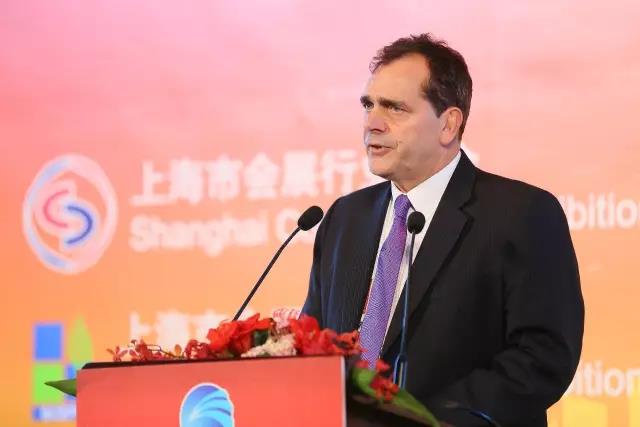
I. Challenges currently faced by UBM Asia in the Chinese market
1. Growth of large exhibitions is constrained by venue capacity. If we want to turn crisis into opportunity, we must seriously consider venue limitations. The September Hong Kong Jewellery Fair gave us inspiration: large exhibitions can use two venues, one exhibition in two halls; another idea is to split one exhibition into two phases according to content. For example, a hotel show can be divided into two phases, one mainly for food and catering and the other mainly for hotel furniture, decoration and safety products. Because of venue limitations, we can become more innovative and achieve more growth.
2. Competition among similar exhibitions. Competition undoubtedly brings many benefits and is a good opportunity to improve one's own capabilities. But the prerequisite must be fairness, competition in a fair environment rather than through irregular methods. We have previously seen exhibitions with similar themes held during the same period, leading to lower prices and lower profits, which is a situation no one wants to see. This is not good for exhibitors or organizers, and it may also be a loss for Shanghai. Therefore, when considering exhibitions, the existence of competition among similar shows should be taken into account, and whether schedules can be staggered should be considered. This is also good for Shanghai and should be considered at the decision-making level.
II. UBM Asia's strategy in China
1. Focus attention on large exhibitions. Large exhibitions refer to those with sales exceeding GBP 1 million. Such measures and strategies can bring us the highest returns.
2. Pay attention to development in second- and third-tier cities. We will bring existing exhibitions to more second- and third-tier cities, and on that basis expand Chinese branded exhibitions overseas.
3. Continue acquisitions and pay more attention to online business. UBM has a strategic partnership with Alibaba. Alibaba is the world's largest business platform, and UBM is an influential exhibition enterprise in Asia. Through this strategic cooperation, the two sides can cross-promote marketing and jointly launch very interesting solutions for the market.
6. Key Points from the Speech by Zhang Xueshan, general manager of Beijing Zhenwei Exhibition Group
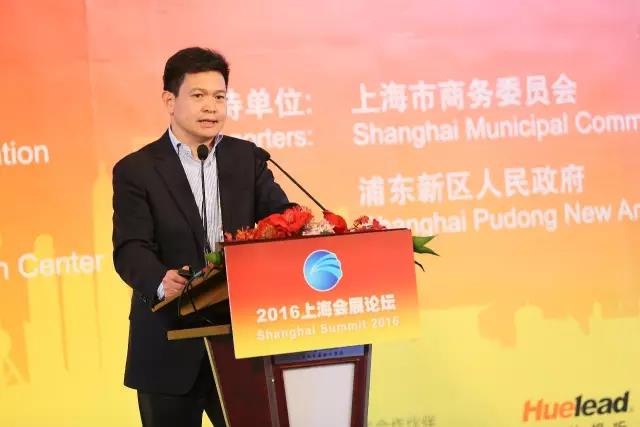
Transforming modern service industries and improving market opening in modern service industries are policies determined by the state. The exhibition industry is a high-end service industry, and the Ministry of Commerce has defined it as a producer service industry.
When discussing strategic path selection, capital operation has become a key direction. Capital operation does not necessarily mean listing. Acquiring projects is also capital operation. Of course, capital alone is not enough in the exhibition industry; brands are also necessary. The exhibition industry is asset-light. In this situation, exhibitors are still asked to pay one year or two years in advance, including deposits and venue rentals. Why do they trust you so much? Because of the brand. They trust your brand, so they give you money.
In the Chinese market, fast-growing players are either backed by state-owned enterprises, because they do not lack capital or background, or are foreign companies with capital and brands. After establishing brands overseas, they copy them directly in China, while also using capital to acquire and merge exhibitions and capture territory. Private companies have fewer backgrounds and resources, and in the process of building brands, they may need to accelerate the process of embracing resources. Although this may not change the overall industry structure, it is at least a path and method for us. In reality, it can be expected that capital plus brand will certainly be a key focus of future development.
Industrial stratification is taking shape. In the next eight to ten years, individual large exhibitions may dominate, and there may be 20 or 30 large exhibition groups rather than, as now, thousands of exhibition companies in China. The market will certainly become relatively concentrated and somewhat monopolistic. Every industry follows this path. The IT industry 20 years ago, the home appliance industry 30 years ago, and today's real estate industry have all gradually consolidated and moved toward intensive development. In the next five to ten years, China's exhibition industry will certainly form 20 to 30 large convention and exhibition groups through large-scale mergers and acquisitions and even elimination.