
The 2016 International Exhibition Industry CEO Shanghai Summit, held from January 11 to 12, 2016, took market orientation and international competitiveness as its theme and included five topics.
The third forum was held on the morning of January 12. The topic was Opportunities and Challenges for Consumer Exhibitions in China.
This forum was moderated by Mark Cochrane, regional manager for Asia Pacific of UFI.
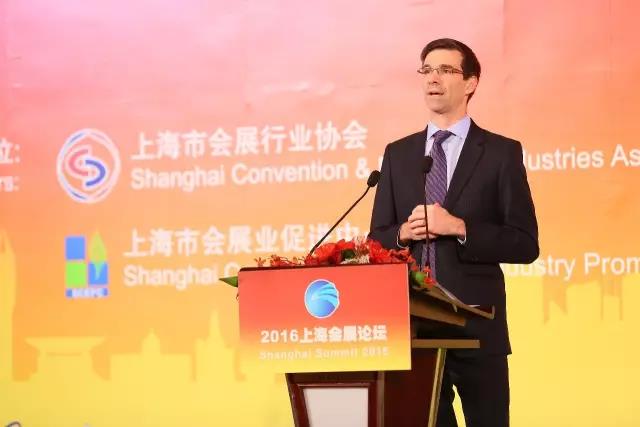
Mark Cochrane said:
We face many challenges, but there are also many exciting opportunities, including consumer exhibitions, the sibling of trade exhibitions. China has the world's largest consumer group, and consumption-driven growth has increasingly become a new growth point for China's economy. Industry leaders from different regions will share with the audience how the consumer exhibitions they organize meet the needs of end consumers in their exhibition concepts, how they formulate differentiated strategies to respond to competition amid the rapid development of e-commerce models, and how B2C exhibitions drive the development of related industries and promote demand growth.
For example, regarding the partnership between UBM and Alibaba, I know UBM will focus on cooperation with Alibaba in the B2B field. But B2B accounts for only 10 percent of Alibaba's revenue. For UBM, there is an opportunity to turn UBM into a B2B and C2C event business, which is Alibaba's main business. This is very likely to become an opportunity in the future.
There were five speakers in this forum: David DuBois, president of the International Association of Exhibitions and Events; Liu Huihui, chairwoman of Shanghai Bohan Exhibition Co., Ltd.; Roberto Rettani, chairman of Fondazione Fiera Milano; Ye Mingshui, chairman of the Taiwan Exhibition and Convention Association; and Lee Newton, CEO of Media 10.
1. Key Points from the Speech by David DuBois, president of IAEE
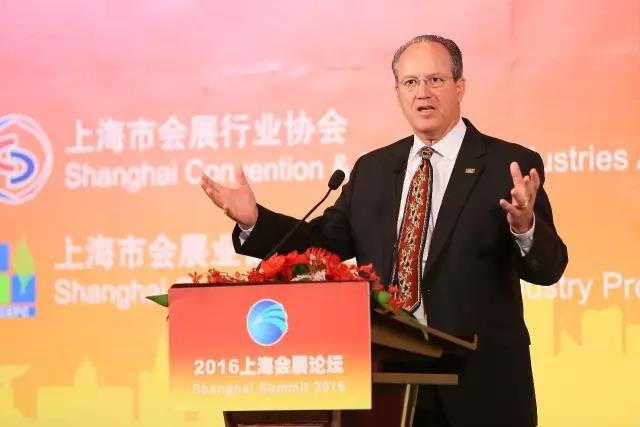
In the United States, Canada and Mexico, 10 percent of the 25,000 exhibitions held each year are consumer exhibitions. IAEE and CEIR, the Center for Exhibition Industry Research, have conducted research on consumer exhibitions.
First, consumer exhibitions are highly sensitive to market response. They have very high visitor traffic and can continuously generate more revenue for exhibitions, including more sponsorship. Therefore, consumer exhibitions are very important and indispensable to us.
Second, the development of the consumer exhibition market is closely related to venues. If we enter a city without sufficient research on local venues and do not know whether a venue's location is attractive or whether it has enough promotion to attract visitors, major problems may arise. At the same time, government has a major influence on all exhibitions, especially consumer exhibitions. Government support, including promotion, affects consumer exhibitions. Therefore, the choice of exhibition location is very important. Organizers must consider whether the exhibition is regional, national or international.
Third is marketing. There are issues here, such as insufficient funding. We must ensure that the marketing department has enough funds and capabilities to discover more opportunities and understand more social dynamics. In addition, we need multiple marketing methods and detailed marketing plans to increase attendance in different ways, including offering substantial discounts, online prizes or lucky draws to raise participant interest. Participants are often willing to engage in interactive opportunities, especially online social interaction. Of course, this depends on the national conditions of the region. Different markets respond differently to discounts. In Shanghai, China, and in many exhibitions, we have seen more and more attention being placed on consumers. We also need to train exhibitors. We have free resources to share, including free online journals from Google, Yahoo and others, which exhibitors can subscribe to for better education.
Fourth, exhibition safety is very important. I know venue managers around the world pay great attention to safety. For consumer exhibitions, because participation is very large and often reaches tens of thousands of people, and because venues are sometimes large public areas such as stadiums, safety is even more important. In Dallas, Texas, in the United States, there is an organization called IAVM, the International Association of Venue Managers. You may visit its website.
2. Key Points from the Speech by Liu Huihui, chairwoman of Shanghai Bohan Exhibition Co., Ltd.
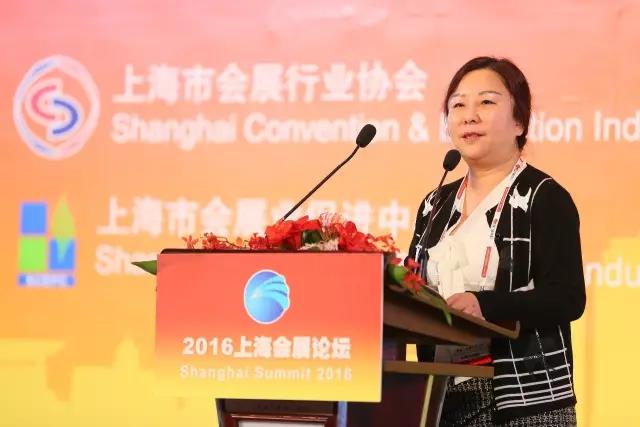
The China Wedding Expo started in 2005. Over the past ten years, it has landed in five cities: Beijing, Shanghai, Guangzhou, Wuhan and Tianjin, with four editions held each year in each city. The expo provides one-stop wedding services for couples preparing for marriage, including wedding photography and all aspects of the wedding process. After ten years of development, it has become the world's largest and most influential wedding exhibition, the top platform in China's wedding sector, and the mainstream sales channel for the wedding industry. In the cities where it is held, visitors already cover about 70 to 80 percent of couples preparing for marriage. In Beijing and Shanghai, each edition attracts more than 100,000 participants. Transactions in the five cities have approached RMB 7 billion, and many enterprises realize one third of their annual revenue through the China Wedding Expo platform. In addition, the official website of China Wedding Expo has become the top portal for the wedding industry, and Wedding Bazaar magazine has become the largest-circulation magazine in the wedding field, with 500,000 wedding-planning members for each issue.
When organizing consumer exhibitions in China, project positioning must be precise. This is an important prerequisite for successfully holding consumer exhibitions in China. Project positioning should be considered from four aspects. First, what is the market outlook of the industry involved? Second, where are consumers' pain points? Can you solve the problems involved in these pain points, and can you provide good solutions? Third, what is the competitive situation in the industry? Fourth, accurate positioning.
How did China Wedding Expo address these four questions? In its start-up stage, we aimed to build the world's largest and most influential wedding exhibition. In 2012, we revised the strategy toward intensive cultivation, turning a single exhibition into the industry's top platform. In the second half of 2015, we revised the strategic goal again and worked to extend downstream from wedding services along the industry chain. One extension was Home Bazaar, covering furniture and home decoration, because marriage is the first major stop in household consumption. Another downstream extension is Baby Bazaar, covering maternal and infant products.
After these four major considerations, our project conclusion was basically that a centralized wedding expo held four times a year can effectively connect supply and demand and is expected to become the mainstream marketing channel in this industry.
To achieve long-term stable development, consumer exhibitions must also solve the issues of cost control and economies of scale. Overall investment cost for consumer exhibitions is higher than for trade exhibitions, because they require enormous promotion costs, customer operation costs, long brand-building cycles and relatively high market cultivation costs. Therefore, scale operations are needed to dilute costs. This mainly means expanding exhibition categories, extending the service chain as much as possible, increasing exhibition frequency, and providing unified services.
In a vertical industry, whether mainstream transaction volume can be achieved depends on whether the transaction volume of each exhibition is recognized by the industry. Whether an exhibition can establish itself as a mainstream marketing channel in the industry is a long-term decision; it is difficult to achieve this through only a two-day exhibition.
We need to train visitors, and we have paid a high price for this. Before the exhibition, we guide visitors to prepare, learn how to order according to their own consumption budgets, and help them make selections and reservations before the event. In this way, the order volume during the two exhibition days can grow substantially.
We added ordering functions to the official website and opened communities, malls and order reviews. We edit a Wedding Bazaar magazine to provide consumers with in-depth interpretation of seasonal wedding fashion. Word of mouth is very important. During consumer exhibitions, various forms of promotion and word-of-mouth communication are the most effective ways to become larger, more substantial and stronger. Consumer exhibitions must rely on word-of-mouth communication. China Wedding Expo has its own strategic operation system, and the system with nearly ten million members is our greatest resource.
For sustained development, we may need to keep pace with the times and respond to competition. We can view this issue in several stages. In the early development stage, we competed with wedding expos of all sizes. After being tested by the market over time, China Wedding Expo now leads by far in order transaction volume at each edition and has achieved a dominant market position.
Regarding competitors, since 2010 we have mainly faced competition from internet e-commerce O2O platforms. Our main approach in the vertical wedding field is to adopt tactics of professionalism, excellence and multidimensional services. As a result, from 2013 to 2015, we accelerated iterative research and development of mobile apps, greatly strengthened member stickiness, increased the order rate to 50 percent, and raised transaction volume from RMB 5 billion in 2012 to nearly RMB 7 billion in 2015.
Our long-term strategy is mainly downstream extension. We are considering expanding from the wedding expo to maternal and infant exhibitions and home exhibitions, forming three major consumer exhibitions. Our nearly ten million member data can be reactivated, and the service chain can be extended and broadened again. At our wedding expos across the country, we have started implementing mobile payment, beginning with a pilot in Shanghai, to form a closed-loop transaction and ordering system. In the second half of this year, expansion into Hangzhou and Chongqing will begin.
Regarding the development trends of consumer exhibitions in China and how we should respond, our view is that under the new situation, consumer exhibitions face severe challenges from internet vertical portals and e-commerce, especially mobile internet. With the emergence of the internet, the entire consumer market has become disintermediated and prices have reached the bottom line. In this situation, what should the form of consumer exhibitions be? Where is the living space and opportunity?
First, because of internet development, low-frequency high-value consumption has shown a particularly strong but also highly conflicted development trend in China. Low-frequency high-value consumer categories have great room for product customization and services, require on-site experience, and require face-to-face negotiation. Under these conditions, how can consumer exhibitions in China survive and develop? We need to improve the pure consumer exhibition model, such as reshaping the business model and quickly connecting with the advantages of the internet, especially mobile internet. We believe the O2O business model is very worthy of reference for consumer exhibitions.
The online-offline integrated operation of China Wedding Expo is an O2O closed-loop system. Consumers with wedding-planning needs can log on to our official website and register online as members. The website has interactive communities and reviews, including wedding-planning guides and interactive communication among users. After interaction, consumers view reviews and merchant product discounts, make appointments, pay deposits online, then go offline for consumption, use mobile payment to complete orders, and return online to post reviews. This is a closed-loop process.
To reshape the business model architecture, organizers must have a new exhibition team capable of integrated online and offline marketing, not merely a team skilled only in exhibition sales.