
The sudden outbreak of COVID-19 has caused serious harm to public health and brought major challenges to social governance and industry management. For example, if key information is released too early or too late, it may cause disorder. In the economic field, if production and projects are not suspended, cluster infections may occur; but if suspension lasts too long, the economy may lose strength and weaker enterprises may even go bankrupt.
The exhibition industry sacrifices its own interests to support epidemic prevention
This contradiction is especially obvious in the exhibition industry because exhibitions are activities involving dense interpersonal interaction. Since manufacturing industries involving interaction between people and machines had to stop, exhibitions and conferences where people gather shoulder to shoulder in limited spaces could not continue. Before the Spring Festival, the commerce authority in Hubei Province decided that all convention and exhibition activities before May would be canceled or postponed. On January 30, the Shanghai Municipal Commission of Commerce also issued a notice suspending all exhibition activities originally scheduled for February.
Like most service industry projects, exhibitions require a long preparation cycle and capital investment. A sudden halt certainly causes losses for enterprises. The exhibition industry's willingness to place the overall situation first and sacrifice itself in exchange for victory against the epidemic should be fully recognized. At the same time, the scale of the losses caused to the exhibition industry by the epidemic, how to respond now, and how to develop after the epidemic are all issues that need discussion.
Exhibition professionals are a sensitive group. From the beginning of the outbreak, they responded actively to the impact on exhibition enterprises and possible countermeasures. Some associations organized online discussions on how to respond to the epidemic's impact, while experts wrote articles analyzing the changes brought by the epidemic and the issues the exhibition industry needs to consider carefully.
Associations should play multiple roles for the industry
Political economy tells us that sound adjustment of production relations can promote the development of productive forces. In response to the epidemic's impact, the countermeasures proposed by experts can be summarized as relying on innovative thinking and adjusting mutual relationships. A key aspect is the relationship among government, market and enterprises. In this process, industry associations can and should play a major role.
First is the association's guiding role for the industry. Generally speaking, many exhibition enterprises are small and medium-sized. When the epidemic broke out, they badly needed a stable voice to help them feel their own presence and avoid the feeling of drifting in a vast ocean. At such a time, an association formed by many enterprises can fully serve as a stabilizing anchor for the whole industry. For example, the Shanghai Convention and Exhibition Industries Association has its own Party organization and can, under the leadership of the higher-level Party committee, provide ideological and emotional guidance during a special period. At the start of the Spring Festival holiday, the association issued a proposal to members, calling on them to fully cooperate with the government in epidemic prevention and control.
Second is the bridge role between government and enterprises. After the outbreak, the government needed to understand enterprise conditions, and enterprises urgently wanted dialogue with the government. At the operational level, it is unrealistic for government departments to communicate one on one with large numbers of enterprises. Associations can therefore serve as communication bridges. During this epidemic, industry associations in many places worked with government departments to distribute questionnaires to members about affected enterprises, which illustrates this role.
Third, and perhaps more importantly, the epidemic has highlighted the platform role of associations in coordinating interests among different parties. Coordination is ultimately about the proportion of losses to be shared. For example, enterprises ask the government for tax reductions and lower social security contributions, but this reduces fiscal revenue. If exhibition projects are suspended or canceled, does this constitute force majeure, and should venue rents be refunded or waived? This involves how losses are shared between organizers and venue operators. If companies stop work, can employees' wages be reduced? During non-statutory holidays, employees cannot work from home or at the office, and if they do work, should wages be doubled? These are adjustments of interests between enterprises and employees. They involve real money and cannot be resolved simply by an expert saying that venues should refund rent when exhibitions stop. The parties need to sit down and negotiate solutions in a spirit of sharing difficulties and overcoming hardship together.
At this time, associations can act as public platforms. For example, when the government makes a decision or adjusts a policy, it is best to consult industry associations. This does not merely add a procedure; it provides a buffer for losses, such as logistics and booth construction preparations that become futile when exhibition projects suddenly stop. When enterprises negotiate with other enterprises or with individuals over economic interests, it is also useful to have a trusted mediator preside over the discussion.
After the epidemic, the role of associations needs to be reconsidered
In Chinese, the character for association or meeting originally carries the meaning of people gathering. Organizations such as associations and societies are formed when many people gather into a group. This is a need of public management after human society develops to a certain stage. Society as a whole needs common goals, and managers generally represent those goals. But society is composed of many individuals, and it is very difficult for managers to directly manage countless individuals. As a result, intermediary organizations gradually emerged.
Workers formed labor unions, farmers formed farmers' associations, industrial and commercial people formed chambers of commerce and trade associations, intellectuals formed academic societies and research associations, and people living away from their hometowns formed hometown associations.
An industry association is a social intermediary organization composed of enterprise legal persons in a given industry. As the government management system reforms, the government can no longer directly manage enterprises to the same extent, and the role of industry associations becomes increasingly important. This principle has been discussed for many years, and the COVID-19 epidemic has further proved the role of industry associations. However, the theoretical intermediary role is not the same as real-world effectiveness. After this epidemic, at least three types of questions need discussion on how industry associations can play their roles better.
First, how should industry associations improve their governance structures and work efficiency? For example, they need stable and mature secretariat teams, functional projects that match the association's position and role, such as training, certification and forums, and strong association leadership.
Second, what kind of relationship should be established between industry associations and government departments? Generally speaking, government departments are in a stronger position, but associations are not subordinate bodies. How should mutual contact and communication be institutionalized?
Third, the work content and influence of associations vary from place to place, and some provinces and municipalities have more than one association. How should association work itself be standardized? When can a national exhibition industry association be established?
Looking more broadly, the epidemic has exposed not only shortcomings in industry management, but also shortcomings in many aspects of social governance. These shortcomings stem not only from the quality of officials, but also from imperfect governance structures, which leave even capable officials who want to do things in a dilemma during crises. Therefore, this epidemic is a rare opportunity to implement the decision of the Fourth Plenary Session of the 19th CPC Central Committee on advancing the modernization of China's governance system and governance capacity. If this opportunity can be seized to adjust and reform certain structures, directions, models and ideas, it will greatly benefit future development.
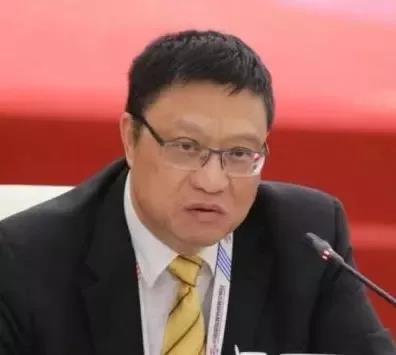
Chen Xianjin
MBA; Party secretary of the Shanghai Convention and Exhibition Industries Association; honorary president of UFI; director of the National Technical Committee for Standardization of the Exhibition Industry. He previously served as chairman of Shanghai International Exhibition Co., Ltd. and vice chairman of CCPIT Shanghai. Since April 2002, he successively served as deputy director of the Shanghai World Expo Bid Office, president of Shanghai World Expo Group, and deputy director of the Bureau of Shanghai World Expo Coordination. From May 2011 to March 2014, he served as deputy director of the Shanghai Municipal Commission of Commerce. From April 2014 to October 2018, he served as president of the Shanghai Convention and Exhibition Industries Association.