
The 2016 International Exhibition Industry CEO Shanghai Summit, held from January 11 to 12, 2016, took market orientation and international competitiveness as its theme and included five topics.
The second forum was held on the afternoon of January 11. The topic was Rebuilding the Strategic Goals of Exhibition Organizers under the Economic New Normal.
Over the past thirty years, China's economy maintained rapid growth thanks to the three engines of investment, exports and consumption. But the normal conditions to which people had become accustomed are now facing profound challenges. Domestic and international economic conditions have changed significantly, and China's economic growth is shifting to a medium-high speed. Against the background of the new normal, economic restructuring and industrial upgrading have created new demands for the convention and exhibition industry and exhibition enterprises, and traditional ways of doing business may undergo major change.
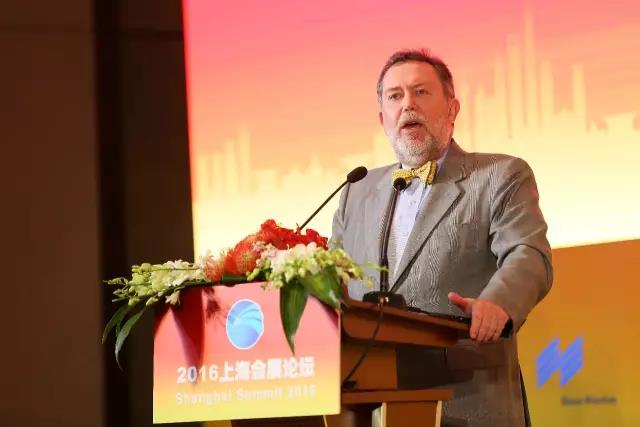
This topic was moderated by Paul Woodward, president of Paul Woodward Consulting. There were six speakers: Klaus Dittrich, chairman and CEO of Messe Muenchen; Xu Yingxin, president of the Textile Industry Branch of China Council for the Promotion of International Trade; Russell Taylor, CEO of ITE Group; Gu Chunting, president of Shanghai International Exhibition Co., Ltd.; Jim Essink, executive president of UBM Asia; and Zhang Xueshan, chairman of Beijing Zhenwei Exhibition Group. The six guest speakers, representing organizers of different types including state-owned enterprises, private companies, foreign-invested enterprises and industry associations, shared with the audience how organizers can focus on their own strengths and weaknesses, formulate medium- and long-term strategic plans through market positioning, and improve core competitiveness in exhibition concepts, management experience and professional skills.
1. Key Points from the Speech by Klaus Dittrich, Chairman and CEO of Messe Muenchen
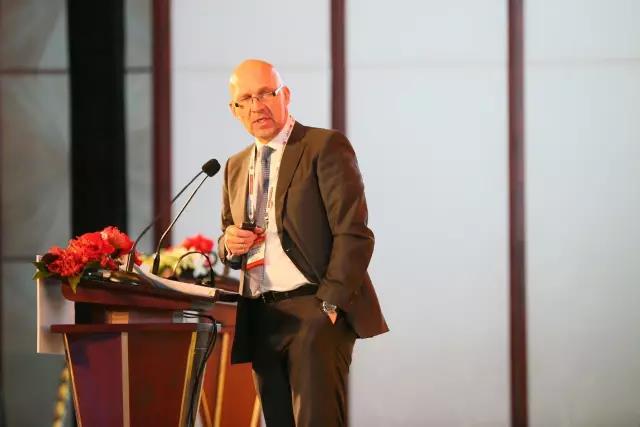
Messe Muenchen has already recognized the so-called new normal. Facing lower economic growth, stronger competition and more mergers, Messe Muenchen continues to learn and think about how to overcome these difficulties. Our approach in China is as follows.
First, talent comes first. Messe Muenchen Shanghai values talent, which is one of the reasons we have been able to succeed globally. Since 2010, the Shanghai company has grown from 50 employees to more than 150. We need Chinese employees to serve China. Our consistent strategy is to develop talent first, and only then develop business.
Second, build strong local cooperation. Based on cooperation with local partners, we have formed a very strong exhibition portfolio. A good example is Shanghai New International Expo Centre, in which Messe Muenchen has invested. It has become our most important gateway into the Chinese market.
Third, open up new markets. This may mean taking Chinese exhibitors abroad or seeking new opportunities in China's second-tier cities.
Fourth, optimize corporate strategy to adapt to the digital age. We continue to research and develop new digital business models and provide digital services to our customers.
2. Key Points from the Speech by Xu Yingxin, President of the Textile Industry Branch of CCPIT

The textile industry faces the same overall situation as China's economy. Compared with the Eleventh Five-Year Plan period, growth slowed and drivers changed during the Twelfth Five-Year Plan period, and the industry began to enter the new normal. Against this background, the textile industry's operations remain generally stable. We need to consider how textile exhibitions should transform and grow under this new normal. The Thirteenth Five-Year Plan period is a critical time for China's textile industry and also a critical five-year period for our exhibitions. We must strive to build textile exhibitions into world-class events. I would like to share three ideas.
First, during the Thirteenth Five-Year Plan period, the textile industry will shift from scale-driven development to quality-driven development. Correspondingly, if textile exhibitions try to grow by 10 percent every year as they did during the Twelfth Five-Year Plan period, it may be difficult. If exhibitions continue to rely on a scale-driven model, they may face enormous challenges. Supply-side reform has recently been emphasized in China. As a typical specialized service supply, the transformation path for exhibitions over the next several years will mainly be to achieve sustainable development by improving quality.
Second, under this situation, exhibitions should actively adapt to the new positioning of the service industry. New changes in the textile industry will drive new changes and new positioning for exhibitions, and we must adjust according to these new characteristics.
Third, in step with the industry's global layout, we should actively build a high-level international exhibition network. Since the international financial crisis, China's textile industry has actively gone global, showing multi-region, multi-field and multi-form expansion at an accelerating pace. It is estimated that the textile industry's outbound investment now exceeds USD 10 billion. We have jointly organized professional apparel, fabric and home textile exhibitions with partners in North America, Europe and South America, and the scale of these exhibitions has increased year by year. At the same time, we actively organize enterprises to participate in professional exhibitions in emerging countries and explore new international layouts.
3. Key Points from the Speech by Russell Taylor, CEO of ITE Group
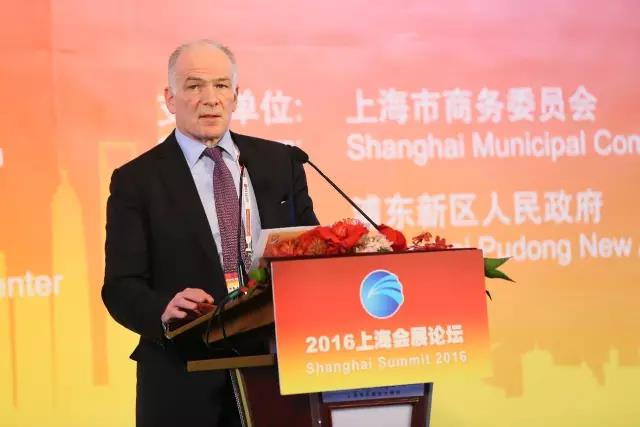
The main feature of the so-called new normal is economic rebalancing, which means we will see lower but more sustainable growth rates. From 2002 to 2011, our market in China saw very significant growth. But by 2012, as the market became flatter, our core market clearly no longer had the same growth rate as before. We therefore tried to develop other markets and enter Asian markets.
How should we formulate a new strategy under China's new normal? I believe attention should be paid to four areas. First, urban demographics, including growth rates and age structures. Second, urbanization and the changes in growing cities, which require better urban development. Third, digitalization, including the Internet of Things, social networks, big data and cloud data. Fourth, scarce resources, mainly the shortage of energy, electricity and water in some places caused by relatively rapid population growth.
In thinking about the new normal, we will pay more attention to second-tier cities. We need to compete with competitors in second-tier cities, rather than with stronger competitors in first-tier cities such as Shanghai. For example, we will focus on industries where we have more experience, such as technology, fashion, retail and supply chains. Over the past 25 years, ITE has continuously adjusted its strategic focus and objectives as the market environment has changed. At present, we focus on the markets of China, Southeast Asia and India.
We have great confidence in the Chinese market, because I believe China's exhibition industry will also enter the new normal and undergo transformation. For existing exhibition companies and organizers, especially organizers of large exhibitions, the adjustments and difficulties required by the new normal are much greater than ours.