
Source: China.com.
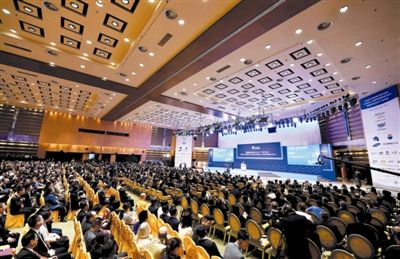
On March 26, the Boao Forum for Asia Annual Conference 2017 closed and released the Declaration on Promoting Economic Globalization, calling on governments around the world and the global business community to continue advancing market openness, inclusive growth and economic cooperation, keep promoting economic globalization, and ensure common prosperity and sustainable growth for all economies.
Looking across world economic history, economic globalization is an inevitable trend in world economic development. The world economy is an organic whole formed by the economic activities of countries and regions. The development of the world economy and economic globalization reinforce each other: globalization deepens continuously under the impetus of economic development, while economic development is also promoted by globalization. Globalization provides all countries with a broad stage for economic exchange and development opportunities, enabling every country to benefit from it. In the process of economic globalization, not only have developed countries achieved a high degree of integration in capital, technology and markets, but the economic interests of developed and developing countries have also become intertwined, forming mutually beneficial economic relationships. Increasingly frequent international economic exchanges and closer economic relationships have created conditions for the optimal allocation of production factors and the full use of comparative advantages in all countries, thereby promoting the overall development of the world economy.
Economic globalization concentrates competition among countries in the economic field, which is conducive to world peace and development. Against the background of economic globalization, factors that lead countries to war have decreased, especially among countries that have made greater progress in globalization. Economic globalization has turned competition among countries into competition in economic and technological strength. Countries around the world have shifted their attention to economic development and regard the pursuit of a favorable international economic environment and room for economic activity as an important goal. Therefore, economic, technological and other factors play an increasingly important role in international relations, while the importance of traditional military strength has greatly declined.
However, current anti-globalization behavior led by Western countries, with the United States at the forefront, is intensifying. Newly elected U.S. President Donald Trump has attributed unemployment and slow wage growth among low-skilled workers in the United States to international trade, and his trade stance has strong protectionist characteristics. Under the slogan of America First, the Trump administration is reshaping U.S. trade policy. The United States has announced its withdrawal from the Trans-Pacific Partnership, is starting renegotiation of the North American Free Trade Agreement, has deeply frozen negotiations on the Transatlantic Trade and Investment Partnership with the European Union, and is even preparing to act against the World Trade Organization, the basic framework of global free trade. Under U.S. opposition, the communique of the G20 finance ministers and central bank governors meeting held in March removed language opposing trade protectionism. This was the first time in ten years that the G20 did not clearly support openness and free trade. Given the United States' position as the world's largest economy, the Trump administration's trade protectionist actions will have huge global spillover effects. They will not only hinder trade liberalization, but may also trigger a new round of global trade war.
In response, Asian countries represented by China are vigorously promoting international trade liberalization and investment facilitation, leading the development of economic globalization. Participants at the Boao Forum for Asia Annual Conference 2017 generally believed that, on the one hand, globalization must take into account marginalized groups whose interests have been harmed and must become more inclusive. On the other hand, the basic principles and positive aspects of globalization should be fully affirmed and upheld, and there must be no turning back.
Asia has always been an active participant, beneficiary and builder of economic globalization. In actively participating in the process of economic globalization, Asia, including China, has achieved great success, realized leapfrog development and provided rare opportunities for world economic growth. Asia is increasingly becoming a key region for world economic growth, with its contribution to global growth reaching around 50 percent. At present, Asia is working toward regional economic integration through initiatives and concepts such as the Regional Comprehensive Economic Partnership, the Belt and Road Initiative, and the Free Trade Area of the Asia-Pacific. It is joining hands to build a global value-chain partnership system and create a more open and fair new international trade and investment system.
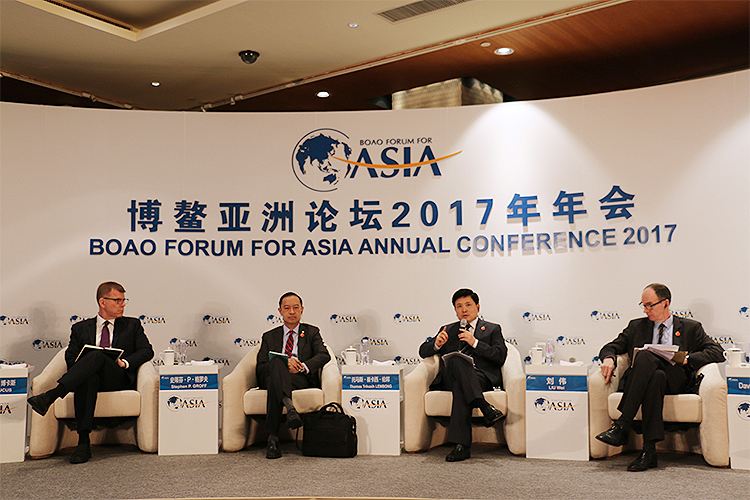
The declaration on promoting economic globalization released at the Boao Forum for Asia Annual Conference 2017 pointed out that economic globalization is an inevitable result of scientific and technological progress and has powerfully promoted global economic growth and poverty reduction over the past several decades. Under the new circumstances of rising anti-globalization and protectionism, the Boao Forum proposed an Asian solution for continuing to promote economic globalization. First, countries should improve the international economic order and global governance system to ensure that economic globalization benefits a wider range of people. Second, governments should jointly oppose trade protectionism, jointly uphold and further promote trade and investment liberalization and facilitation, and continuously reform and improve multilateral trade and investment mechanisms and governance. Third, all parties should work together to address fragmentation in free trade arrangements and explore the establishment of more open, inclusive, fair and reasonable bilateral and multilateral trade arrangements. Fourth, multilateral international financial institutions should strengthen their own reform while strengthening and improving financial regulation, and fully leverage the role of cross-border capital flows in driving economic growth. Fifth, countries should actively promote technological innovation and facilitate the cross-border flow of knowledge and information. Sixth, all parties should support and establish open multilateral cooperation mechanisms and jointly promote connectivity in infrastructure, systems, institutions and people-to-people exchanges.
China has shown strong leadership in advancing economic globalization, giving all parties great confidence. At the World Economic Forum in Davos this January, President Xi Jinping pointed out that economic globalization has provided strong momentum for world economic growth, promoted the flow of goods and capital, advances in science and technology and civilization, and exchanges among peoples. He said it is necessary to adapt to and guide economic globalization, eliminate its negative impacts, and make it better benefit every country and every nation. President Xi also proposed three major approaches for promoting economic globalization, contributing Chinese wisdom to the realization of a more dynamic, more inclusive and more sustainable globalization process.
At present, China is sharing development opportunities with countries around the world through the Belt and Road Initiative and other efforts, effectively promoting international trade and investment and jointly building a community with a shared future for humanity. Since President Xi proposed the Belt and Road Initiative in 2013, Chinese enterprises have invested more than USD 50 billion in countries along the routes, driving economic development in those countries and creating a large number of jobs. The Belt and Road Initiative has received responses from more than 100 countries, and 65 countries have signed relevant cooperation memoranda with China. China's Belt and Road Initiative is gradually aligning with the development strategies of countries along the routes, connecting the Chinese dream with the world dream, embodying the principles of extensive consultation, joint contribution and shared benefits, and injecting strong momentum into the deep development of economic globalization and sustained world economic growth. The Asian Competitiveness Annual Report 2017 released by the Boao Forum for Asia pointed out that the achievements of Belt and Road construction remind people that globalization is developing deeply in another mutually beneficial and win-win way, bringing dividends to all participants, benefiting people in countries along the routes, and becoming an important engine for world economic development.