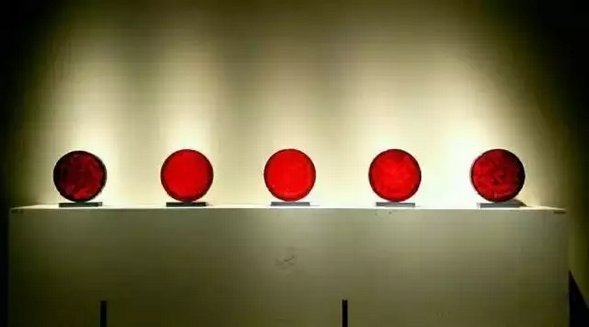
Source: Shanghai Exhibition Website.
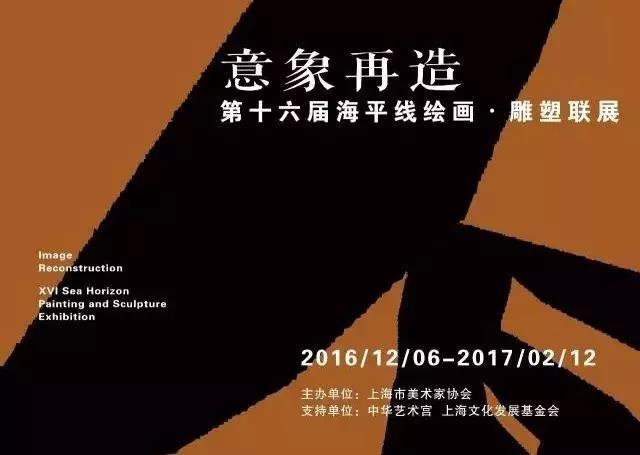
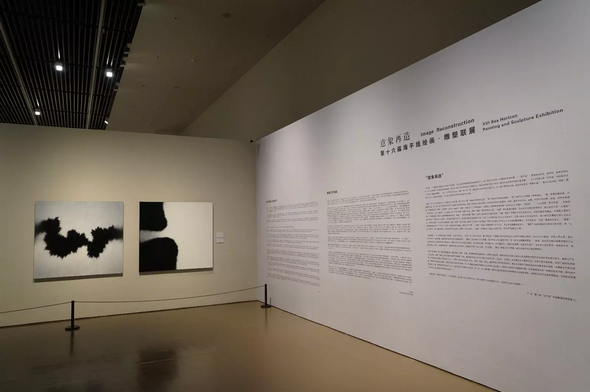
Exhibition period: December 6, 2016 to February 12, 2017.
Viewing hours: 9:00 a.m. to 5:00 p.m., closed on Mondays.
Venue: China Art Palace, Hall 17.
Preface
Looking back at the last century, on June 19, 1986, the Horizon Line 86 Painting Joint Exhibition, organized by the Shanghai Branch of the China Artists Association, made its first appearance at the Shanghai Art Exhibition Hall. It marked the beginning of an artistic journey. With academic exploration in visual art as its purpose, the exhibition invited 26 young and middle-aged artists with exploratory courage and distinctive artistic personalities, presenting 85 works in total. The exhibition attracted attention from Shanghai and the national art community, and peers from Beijing, Hebei, Jiangsu, Zhejiang and other places came specially to view it. Horizon Line 86 also initiated a new academic mechanism integrating exhibition, media communication and academic discussion. The impact created by Horizon Line went far beyond the exhibition itself. It inspired thinking and debate in Shanghai's cultural circles on culture and art, and more importantly, it moved from emphasizing individual artistic pursuit to discovering the social value of art.
As the artists of the first Horizon Line exhibition grew, the ripple effect it created has continued to this day. Having successfully held 15 editions, Horizon Line has become an important branded exhibition in Shanghai's art community. Over the past 30 years, Horizon Line has always taken young and middle-aged artists as its main force and has emphasized exploration, academic quality and contemporary relevance. It has introduced nearly 400 artists, most of whom have become backbone forces in Shanghai's art community. It can be said that Horizon Line has played an irreplaceable role in discovering and cultivating young and middle-aged artistic talent in Shanghai.
The theme of this edition of Horizon Line is Reimagining Imagery. At a time when the focus of Chinese cultural development has returned to the exploration of native culture and philosophy, we attempt to return to reflection on Eastern culture. Imagery is a distinctive mode of Eastern aesthetic expression and is deeply embedded in our cultural bloodstream. Since reform and opening-up, Eastern and Western cultures have converged and integrated. The concept of imagery is no longer limited to its traditional meaning, but has become a renewed examination of Eastern cultural value in an international context. The aesthetic connotation of imagery has become more international, broader and more interactive. We invited 31 artists to present more than 150 works, five by each artist, at China Art Palace. Through painting, sculpture, installation, video and other forms, the exhibition presents works by domestic and overseas young and middle-aged artists who explore and study new developments in Eastern culture. It interprets the reconstruction and elevation of the concept of imagery in a contemporary context and demonstrates its uniqueness, vitality and development on the international cultural and artistic stage.
This will be a new departure for Horizon Line. Horizon Line is not only a brand, but also a symbol. As a brand, its 30 years of accumulation are an invaluable cultural asset. As a symbol, it carries forward the fine traditions of Shanghai-style culture, opens the artistic territory of a new era, and builds a rainbow for younger artists to cross the horizon and reach their dreams for the future. In the years ahead, we will continue to uphold the idea of staying true to the original aspiration and pursuing innovative development, pushing Horizon Line toward new brilliance.
Reimagining Imagery: Curator Ding She on the 16th Horizon Line Painting and Sculpture Joint Exhibition
The Horizon Line Painting and Sculpture Joint Exhibition has reached its 30th anniversary since 1986. It is one of the most important branded exhibitions in Shanghai's art community, and some have called it China's earliest biennial. Horizon Line follows principles of contemporaneity, academic quality and exploration, supporting and focusing on the growth and development of young and middle-aged artists. The exhibition has introduced works by nearly 400 artists, who have become central forces in Shanghai and even in the national art community today.
The 15th special edition of Horizon Line in 2014 offered a retrospective summary of the Horizon Line Painting and Sculpture Joint Exhibition. In this edition, the curatorial focus returns to the exploration of Chinese culture and Eastern philosophical thought. The theme is Reimagining Imagery, with emphasis on discussing the locality, development and dissemination of the Chinese concept of imagery, and on how Chinese cultural value can be expressed in an international context.
Imagery is a mode of Eastern aesthetic expression and permeates our cultural bloodstream. Ancient thinkers held that idea refers to inner and abstract intention, while image refers to the external and concrete object. Idea originates in the heart and is expressed through image, while image is the vessel of idea. In the history of Chinese thought, Confucianism, Buddhism and Daoism together formed the philosophical foundation of Chinese culture and established a distinctive Eastern aesthetic. Interest and spirit in visual aesthetic sensibility, methods and experience in the Daoist dimension, poetic feeling and subtle realm in expressive temperament, and perception and sublimation in insight together constitute the main expressions of imagery.
Early literati painters interpreted the concept of imagery in different ways. Wang Wei unified poetic feeling and pictorial realm in literati ink painting. Fan Kuan's mountains and rivers are thick and rich, trees and grasses lush and moist; Su Shi's view that judging painting by mere likeness shows a childlike level; and Qi Baishi's idea of between likeness and unlikeness are all excellent reflections of imagery aesthetics. Imagery aesthetics has multiple dimensions, but also limitations arising from cultural identity. Therefore, we cannot overextend the concept of imagery, cannot call every blurred area between abstraction and representation imagery, and cannot confuse Chinese imagery with Western expressionism. Chinese imagery is not the same as Western expressionism. Expressionism emphasizes direct expression, with brushwork serving only form or vision, while Chinese freehand expression must proceed within certain rules and methods and pays more attention to the spiritual connotation behind the object.
Today, when people again pursue Eastern ways of life, this reflects confidence in Eastern culture and the return of individual spirit to Eastern thought. Since reform and opening-up, Eastern and Western cultures have converged and integrated. The contemporary concept of imagery is no longer limited to traditional expression, but is a renewed examination of Eastern cultural value in an international context. Today, speaking of reimagining has contemporary significance. Imagery aesthetics is also more international, broader and more interactive, reflecting the cultural bearing of China as a major country. The contemporaneity of imagery must be rooted in native culture. Native culture is the foundation and nourishment. Pictographic reading is an Eastern aesthetic habit, while inner intention is feeling and spiritual need. Different readers have different needs, and therefore different possibilities. In a certain sense, imagery is an Eastern philosophical view, rich and all-embracing in content.
Reimagining imagery is both a return and a development, and it is also a form of confidence. Reimagining is a cultural idea and an attitude. Today's Chinese visual expression is extremely rich in methods and means, but in form it often remains broadly similar, making cultural and regional features difficult to distinguish and unable to meet higher cultural and spiritual needs. Reimagining means respecting one's own culture, reexamining native culture and refining cultural essence. In the process of reimagining, we need to grasp the relationship between the Eastern visual system and the Western expressive system, borrow external methods and means to speak about Chinese aesthetics, Chinese stories, Chinese habits and Chinese philosophy, excavate traditional classics, rescue cultural heritage, give new life to ancient Eastern symbols, and inherit and develop cultural treasures that may otherwise disappear. In sorting out traditional Chinese culture, we should emphasize the contemporary context, contemporary connections and contemporary attitude. Reimagining means contemporary communication again and the renewed outward expression of contemporary Chinese cultural value.
This edition of the Reimagining Imagery Horizon Line Painting and Sculpture Joint Exhibition presents paintings, sculptures, installations, video works and other forms. It invites 30 young and middle-aged artists from Shanghai and elsewhere in China who explore and study new developments in Eastern culture. The exhibition presents the independent spirit of contemporary literati, interprets the reconstruction and elevation of the concept of imagery in the contemporary context, and demonstrates its uniqueness, vitality and development on the international cultural and artistic stage. The participating artists' works are rich in form and distinctive in character, reflecting humanistic reflection and visual exploration in an international context. The exhibition discusses possibilities within the contemporary concept of imagery, including artistic realm, writing, understanding of the Dao, thought, construction and reconstruction.
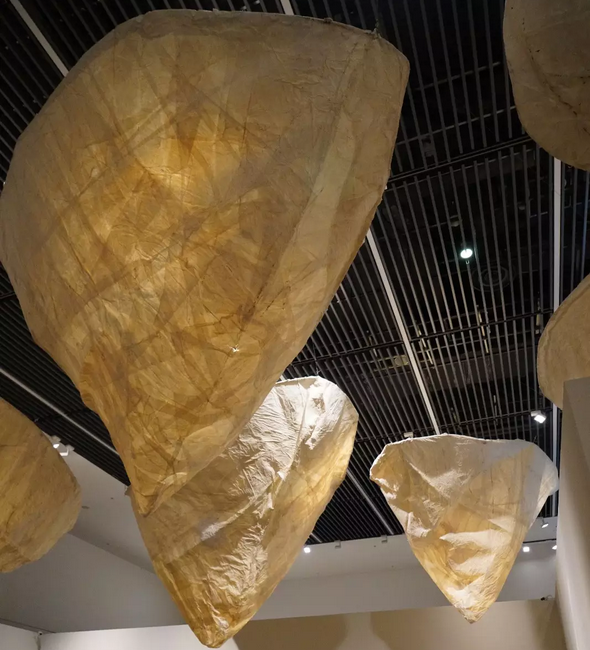
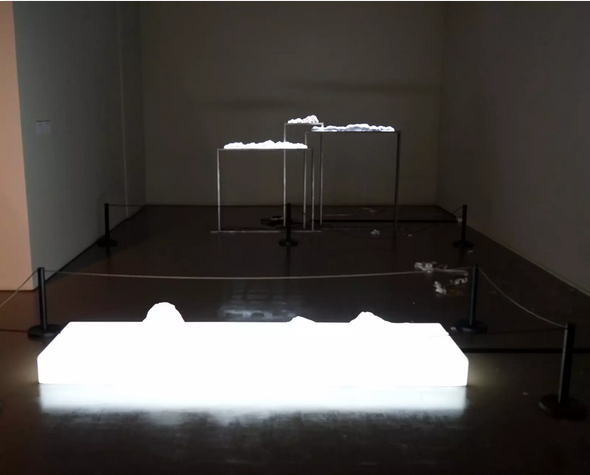
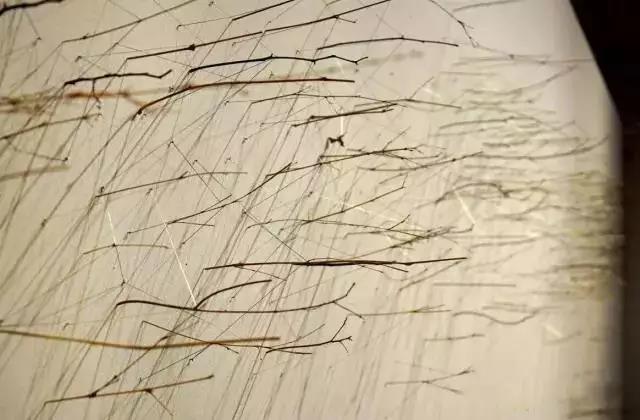
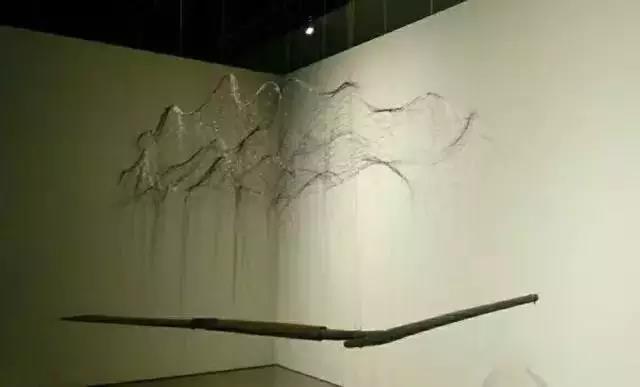
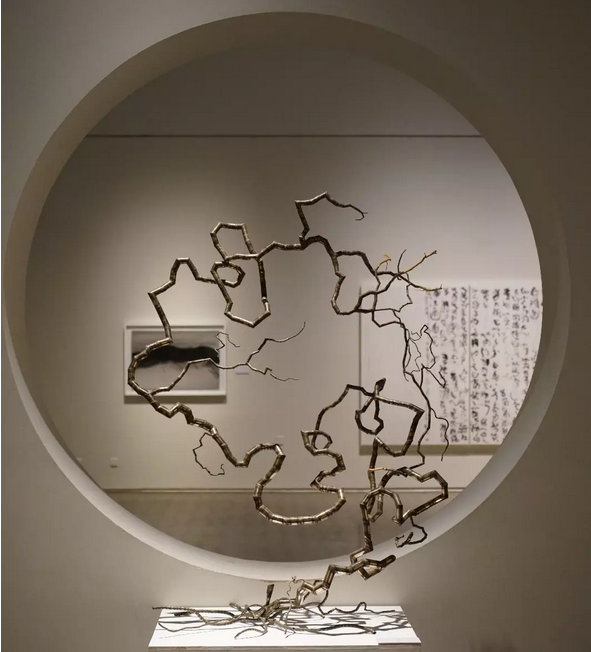
Yan Feixiang's paintings are both vast and microscopic, filled with Eastern philosophical meaning. Huang Jun's works use electrocardiograms to record thoughts during the creative process. Wang Yizhou makes inverted mountains out of rice paper, causing the Earth's gravity to seem to disappear. Men Yaxu uses stainless steel to give traditional Chinese landscape a new visual possibility. Yang Ning's Chinese-painting figures from antiquity seem placed within modern life. Dong Wensheng uses light to outline water ripples, giving lakes, rivers and seas a subtle realm. Shao Wenhuan uses video works to reconstruct familiar Jiangnan garden scenes into a mysterious garden according to his own method. Lu Qizhang's installation works make the artistic realm of Jiangnan landscape even more ethereal.
The concept of Reimagining Imagery is only a topic that starts discussion. It is a discussion of contemporary cultural phenomena and of the future development of Chinese art. This discussion will continue.