
At the 2017 International Exhibition Industry CEO Shanghai Summit, leading figures from the exhibition industry in China and abroad delivered excellent speeches. Based on the shorthand transcripts, the secretariat of the Shanghai Convention and Exhibition Industries Association compiled the key points of the speeches and published them in eight installments. This is the final installment. Thank you for following the series.
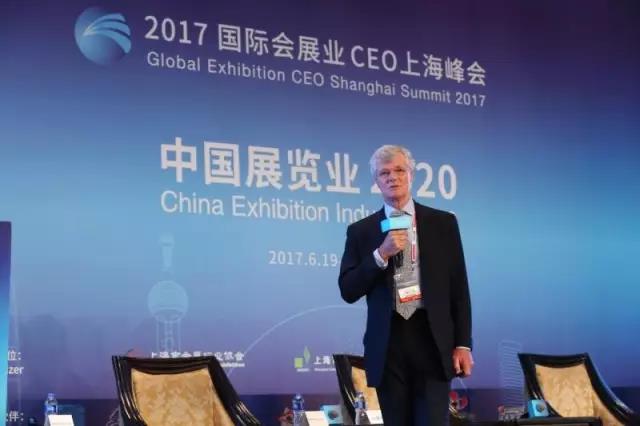
Speech time: morning of June 20, 2017
Speech theme: consumption upgrading: the guiding role of consumption upgrading (panel discussion)
Speaker: Sandy Angus, chairman of Montgomery Group
Key points:
Montgomery Group, with a history of more than 120 years, entered the Chinese market in 1998. After successfully organizing four editions of Art Basel Hong Kong, Montgomery also launched PHOTOFAIRS Shanghai three years ago. Bringing together the world's top photographic artworks, the fair will again be held at the Shanghai Exhibition Center from September 8 to 10 this year.
In recent years, the number of Chinese collectors has continued to grow, and China is becoming an emerging force on the world art map.
The successful organization of PHOTOFAIRS Shanghai has attracted many photography collectors and overseas collectors, and has also provided a high-quality communication and trading platform for artists, collectors and visitors. The 2016 photography fair welcomed 27,000 visitors, which inevitably affected the exhibition standard. The organizer intends to control visitor numbers in order to maintain the fair's professional quality.
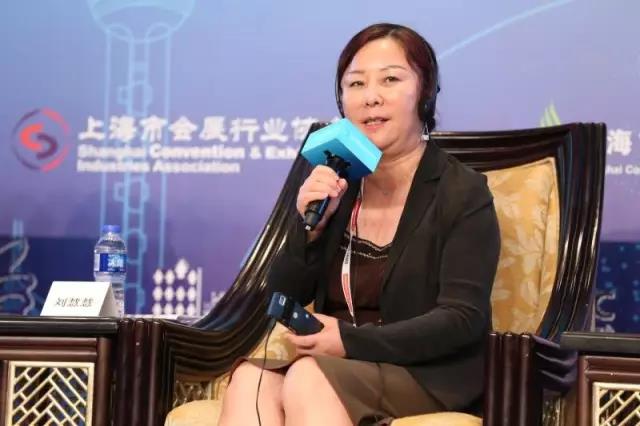
Speech time: morning of June 20, 2017
Speech theme: consumption upgrading: the guiding role of consumption upgrading (panel discussion)
Speaker: Liu Huihui, chairwoman and general manager of Beijing Jinhai Qunying Network Information Technology Co., Ltd.
Key points:
New retail: a new type of consumer exhibition driven by big data.
'New retail' is a new concept derived from the current major trend of consumption upgrading. It means that big data runs through the entire operating process. The China Wedding Expo organized by our company takes big data as its operating core. Relying on an online consumer operation system and an offline exhibitor operation system, China Wedding Expo uses the changing needs and budgets of consumers in its large member database to make customized matches, complete preliminary online selection, and then combine this with offline exhibitions and actual merchant experiences to achieve better results.
To organize B2C consumer exhibitions in China, organizers need to enhance consumers' fashion and intelligent-technology experience. The basic factors to consider include:
1. The category should preferably be a large-volume rigid demand;
2. The unit price of the product or service should preferably not be too low;
3. It should require scenario-based experience, face-to-face communication and long-term consumption decisions;
4. There should be room to imagine a main industry channel or platform, and room to extend the breadth and depth of the industrial chain;
5. Mobile terminals, VR, 720-degree panoramic experience and other smart technologies should be deeply applied and generate clear effects.
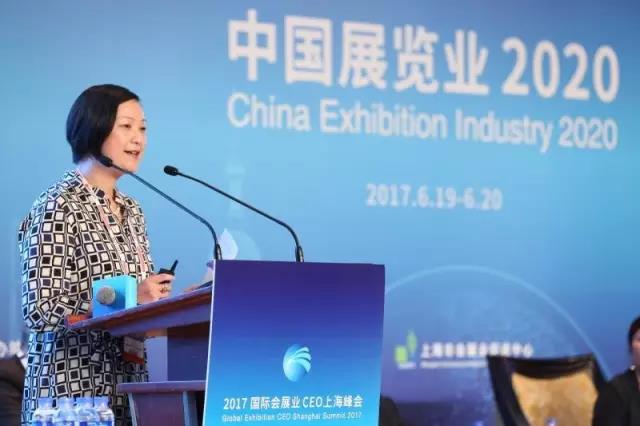
Speech time: morning of June 20, 2017
Speech theme: consumption upgrading: the guiding role of consumption upgrading (panel discussion)
Speaker: Chen Jie, general manager of Shanghai Xuandong Huizhan Culture Communication Co., Ltd.
Key points:
Animation and comics exhibitions in the era of affordable luxury.
China International Cartoon & Game Expo (CCG EXPO) is a comprehensive exhibition combining B2B and B2C. With the development of China's original animation and game industry in recent years, the CCG venue not only features exhibitors displaying a wide range of products, but also provides rich entertainment activities organized by Xuandong Huizhan, including various competitions, performances, celebrity meetings and animated film screenings. On-site sales are extremely active. Visitors often prepare their visiting plans in advance and bring shopping lists to buy their favorite products, especially limited customized products available only at the show.
Today's animation and comics exhibitions have broken many traditional perceptions:
1. They are no longer exhibitions only for children or a small group. Statistics show that 80% of CCG visitors are aged 17 to 24. They have distinctive ways of thinking and fixed language systems. CCG is an all-age program mainly attended by adults and marked by clear pop-culture and subculture features.
2. They are no longer temple fairs. High-quality animation and game exhibitions bring together international brands such as Disney, Sony, Microsoft and Bandai, as well as domestic internet giants such as Tencent, NetEase Comics and Youku Tudou, greatly improving the quality of the event.
3. They are not small commodity markets. Over the past five years, both the unit prices of CCG products and consumer spending have risen sharply, with per-capita spending exceeding one thousand yuan and reaching the level of affordable luxury consumption.
4. They are not merely a simple addition of animation, comics and games. Animation IP has been integrated with catering, leisure, entertainment and other industries, forming a broad pan-entertainment industry cluster.
5. They are not ordinary commercial activities. They have major social and cultural influence and serve as a mutually beneficial platform for different interest groups.
The case of The Twin Moons shows that exhibitions are the best product laboratories. At the venue, R&D teams see the most direct and abundant feedback, which influences the story development and style formation of their works. CCG has extended from a promotion platform to an R&D platform, while helping animation IP find the most suitable partners and become an ideal platform for secondary development.
Predictions for the development trend of animation and comics exhibitions:
1. Exhibits will become more refined and segmented;
2. Animation and comics are becoming mainstream and popularized, and exhibitions will transform from industry activities into social focal events;
3. With the entry of capital, mergers and expansion will be inevitable.
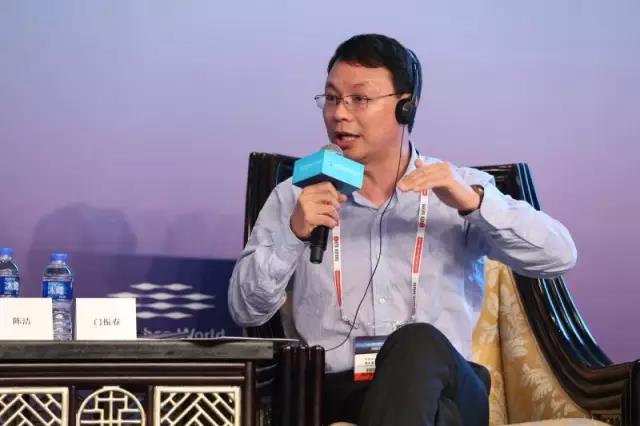
Speech time: morning of June 20, 2017
Speech theme: consumption upgrading: the guiding role of consumption upgrading (panel discussion)
Speaker: Men Zhenchun, chairman of Qingdao Haiming International Exhibition Group
Key points:
The guiding role of industrial upgrading.
From Qingdao, a second-tier city, to more than twenty cities across China, Haiming has worked in the exhibition industry for 17 years. From its initial projects designed around urbanization and industrialization, to later project extensions into jewelry and industrial equipment as industries changed, and to its recent focus on catering, beauty, medical care, education and other projects more closely related to people's livelihood and wellness, Haiming has followed market changes all the way from basic needs to spiritual needs and seized each round of opportunities.
The company's three strategies for market layout are:
1. Borrow the approach of 'surrounding cities from rural areas': expand from second-tier cities and, when conditions are mature, seize opportunities to enter first-tier cities;
2. Position itself in first-tier markets, occupy the high ground, and then quickly expand into second-tier cities;
3. Use one point for trial-and-error iteration, and replicate nationwide after success.
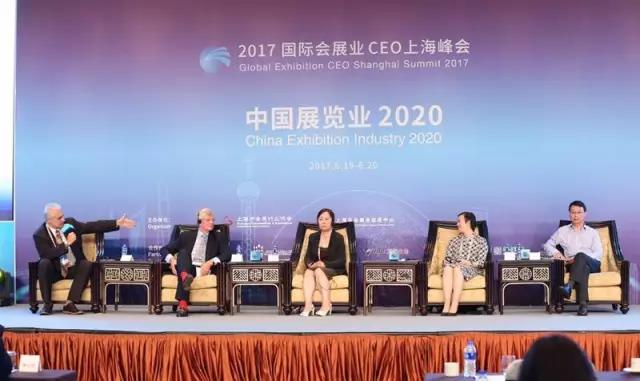
Q&A session:
Question: In the next two to three years, which industry will be the most interesting and important for consumers?
Sandy Angus: The cultural industry is very important. Cultural consumer exhibitions in broad cultural categories such as sculpture, architecture, photography and contemporary art will prosper in China.
Liu Huihui: There will be great room in three major areas of family consumption: weddings, home decoration and childcare. Customer experience and matching personalized needs are very important.
Chen Jie: Consumer exhibitions that bring consumers happiness and experience.
Men Zhenchun: The most interesting areas are the pursuit of beauty, fear of death and lack of love. Consumer exhibitions built around these needs will certainly work.
Question: Large cities or small cities: which are more suitable for consumer exhibitions?
Men Zhenchun: In first-tier cities, consumer exhibitions can guide consumption trends and lifestyles. In second-, third- and even fourth-tier cities, there is also broad demand and more resources can be obtained. The best structure is to use first-tier brands to drive exhibitions in second-tier markets.
Chen Jie: The economic strength, residents' income and consumption habits of large or mega cities are more suitable for holding consumer exhibitions, and consumers will have better experiences.
Liu Huihui: For rigid-demand consumption, any city can work. The difference is that different regions pursue different levels of quality and brand, so decisions should be made according to local consumption capacity and level.
Sandy Angus: The middle class will be the main demand and consumer group, and the prospects for consumer exhibitions lie there.
Question: What requirements do consumer exhibition organizers have for venues?
Men Zhenchun: Better discounted prices for small creative consumer exhibitions.
Chen Jie: Venues should have distinctive features and be able to meet different needs; advertising space should be offered at preferential prices.
Liu Huihui: Suitable dates that can meet China Wedding Expo's need to hold four editions each year.
Sandy Angus: Convenient transport around the venue and high communication efficiency from the venue operator.
Moderator for the consumption upgrading keynote session: Michael Kruppe, general manager of Shanghai New International Expo Centre.