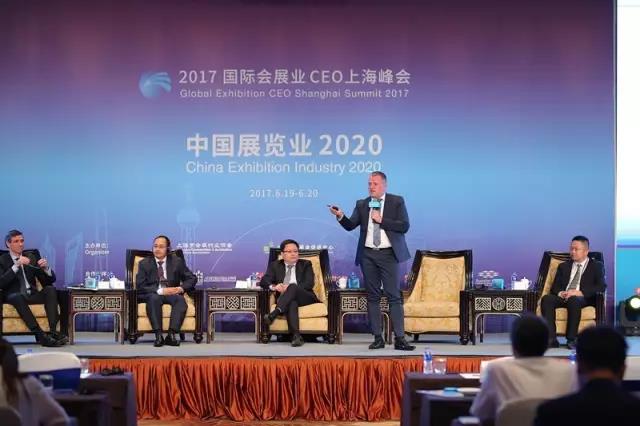
At the 2017 International Exhibition Industry CEO Shanghai Summit, leading figures from the exhibition industry in China and abroad delivered excellent speeches. Based on the shorthand transcripts, the secretariat of the Shanghai Convention and Exhibition Industries Association compiled the key points of the speeches and is publishing them in installments.
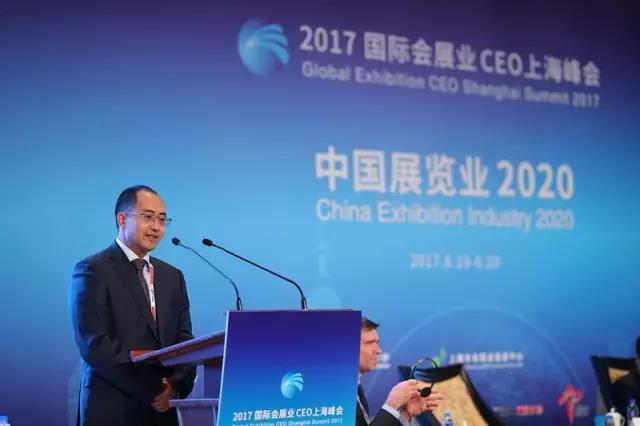
Speech time: afternoon of June 19, 2017.
Speech theme: capitalization of the exhibition industry: challenges of capitalization.
Speaker: Yang Tao, president of Yunnan Metropolitan Construction Investment Group.
Key points:
Yunnan Metropolitan Construction Investment Group is an internationalized and financialized investment holding group. In the urban development segment, we have been involved in exhibition venue construction. We have developed our own concept for venue construction: building a venue complex and creating another exhibition business model.
Our idea is to connect venues with major projects, such as venue plus tourism, venue plus theme park, and venue plus commerce. We have also established Oriental Global Exhibition Co., Ltd., specializing in exhibitions, including venue management and self-organized shows. It is an asset-light company with registered capital of RMB 1 billion. We hope to use the power of capital to help this company grow rapidly, obtain more exhibition resources, cooperate with everyone, and make some self-organized exhibitions better.
We already have a certain scale in venues. Through an asset-light exhibition operation company, we believe we can form our own full industrial chain covering hardware, software and self-organized exhibitions.
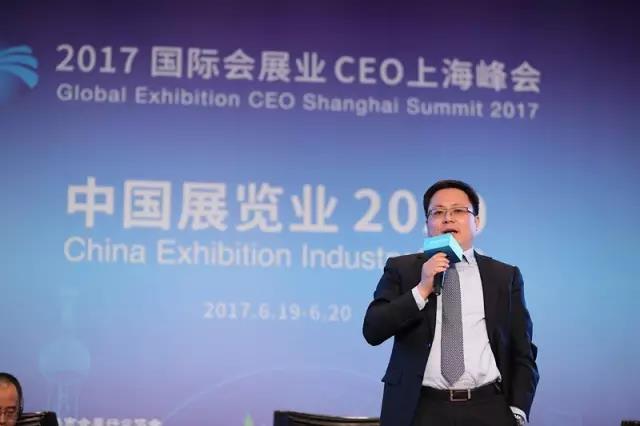
Speech time: afternoon of June 19, 2017.
Speech theme: capitalization of the exhibition industry: challenges of capitalization.
Speaker: Zhou Jianliang, CEO of Zhanqiao Capital Co., Ltd.
Key points:
Capital operation strategy for exhibition enterprises.
Over the past 12 months, nearly 32 mergers and acquisitions occurred worldwide. Outside China, there were 21 mergers and acquisitions, about half of them in the United States. In China, there were 11 mergers and acquisitions involving organizers, which is very exciting. In mature overseas exhibition markets, acquisitions are basically 100 percent acquisitions. In the Chinese market, they are not 100 percent acquisitions, which is a distinctive feature. The main reason is that partners hope to gain access to a market with future growth, but there is also uncertainty about the future.
The exhibition economy is an economy of scale. Exhibition enterprise groups use acquisitions to expand rapidly and integrate industries, markets and talent quickly through capital factors. Only in this way can their profit margins be guaranteed. I especially want to emphasize that in China, there is no purely commercial exhibition company with a market share of 10 percent. In such a market, establishing exhibition groups through mergers and acquisitions is a very fast shortcut to achieving economies of scale.
Exhibition enterprises face various challenges in the capitalization process. First is the choice of industry and market. Second is organizational upgrading. Then come valuation and pricing, including success rates and process management. Finally, and most importantly, is integration: achieving the planned synergies within an extremely short period of time.
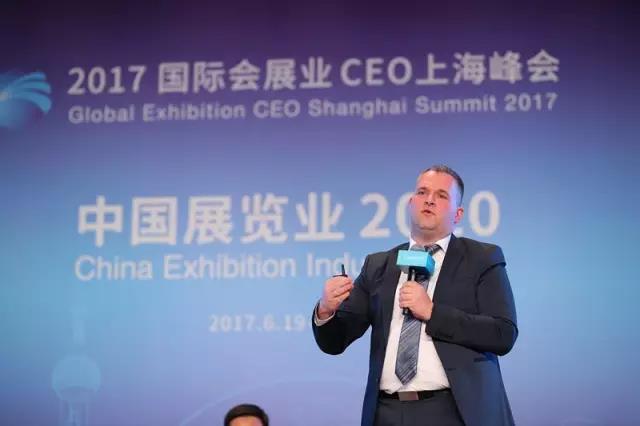
Speech time: afternoon of June 19, 2017.
Speech theme: capitalization of the exhibition industry: challenges of capitalization.
Speaker: Bjoern Kempe, founder of ExposAsia.
Key points:
Challenges of capitalization in the global exhibition industry.
AMR data show that Chinese companies are not yet listed among the top 20 merger and acquisition cases. I believe that within a short time we will see two or three Chinese companies on the list.
Regarding cash flow, over the past 24 months USD 4 billion has been used for mergers and acquisitions. A great deal flowed to the United States, and a great deal also flowed to Asia, especially China and Southeast Asia, with some also going to North Africa and the Middle East. What is interesting is that capital within Asia is now very active, and Chinese capital is ready to play its role better on the world stage.
Regarding returns, it is very difficult to measure them in U.S. dollars. In China, some very large companies have abundant capital, but they have not yet turned their attention beyond China. At the same time, some Chinese private equity firms are also trying to transfer expertise to the market. Where is the driving force of capital? From the perspective of organic growth, we can make better use of global capital, not only by investing in portfolios and real estate, but also in other areas. Through global procurement and global resources, we can build a platform to drive industry expansion, thereby keeping capital supportive of listings. We see very strong GDP growth in Asia. Indonesia announced 6 percent yesterday, the Philippines 7 percent, and China around 8 percent. All this strong GDP growth will attract a lot of capital. China is playing an increasingly important role on the Asian stage.