
At the 2017 International Exhibition Industry CEO Shanghai Summit, leading figures from the exhibition industry in China and abroad delivered excellent speeches. Based on the shorthand transcripts, the secretariat of the Shanghai Convention and Exhibition Industries Association compiled the key points of the speeches and is publishing them in installments.
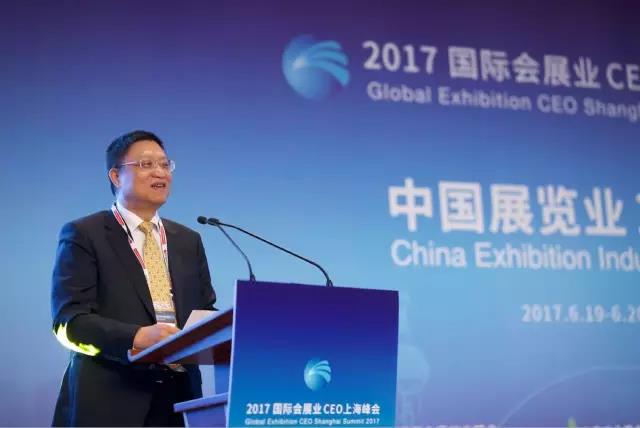
Speech time: afternoon of June 19, 2017.
Speech theme: Better playing the role of government: transformation of government exhibitions.
Moderator: Chen Xianjin, president of the Shanghai Convention and Exhibition Industries Association.
Key points:
Opening remarks for this session.
As everyone knows, governments have actively participated in the holding and operation of exhibitions, especially in cities and regions where the exhibition industry is not yet highly developed. Governments have played a very important role in organizing exhibitions. Now, State Council Document No. 15 clearly requires that, in order to improve market orientation in the exhibition industry, government exhibition activities at all levels should be strictly regulated in the future, fiscal expenditure and administrative participation should be reduced, government purchasing of services from society should be gradually increased, and an exit mechanism for government-run exhibitions should be established.
Based on this requirement, we have invited two speakers. The first speaker represents the government and will discuss, from the government perspective, how government can exit the exhibition-running mechanism. The second speaker comes from a private enterprise and will discuss, from the private-enterprise perspective, how enterprises can take over after government exits exhibitions. We hope these two perspectives will provide useful inspiration.
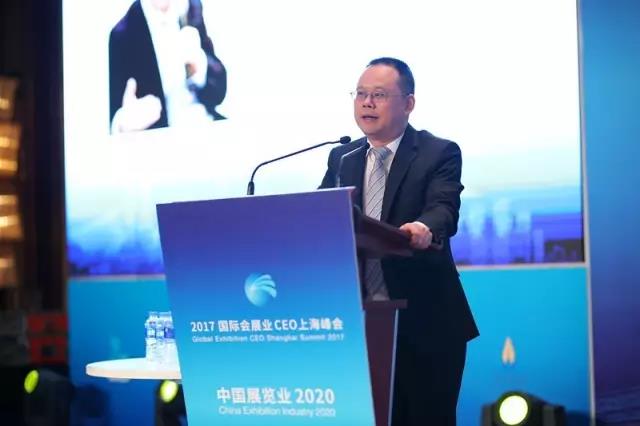
Speech time: afternoon of June 19, 2017.
Speech theme: Better playing the role of government: transformation of government exhibitions.
Speaker: Wang Xin, deputy director of the Chengdu Municipal Bureau of Exposition, Sichuan.
Key points:
The obvious characteristics of government exhibitions are the use of administrative resources and fiscal funds. However, some exhibitions tend to emphasize form over service, with poor quality and results, drawing criticism from the industry toward government exhibitions. The core problem is that the process of running exhibitions violates the development laws of exhibitions themselves.
In the transformation and upgrading of government exhibitions, municipal exhibition authorities need to transform their functions, increase public services and regulate market order. Through policy levers and industry standard building, they should create a local exhibition development environment. Led by the Bureau of Exposition, Chengdu has coordinated more than 30 government departments and established an exhibition government service model centered on one-stop services, improving the convenience of holding exhibitions in Chengdu. Overall, government should gradually withdraw from exhibition operations, strengthen guidance, vigorously cultivate local market players and improve the international level of exhibition projects.
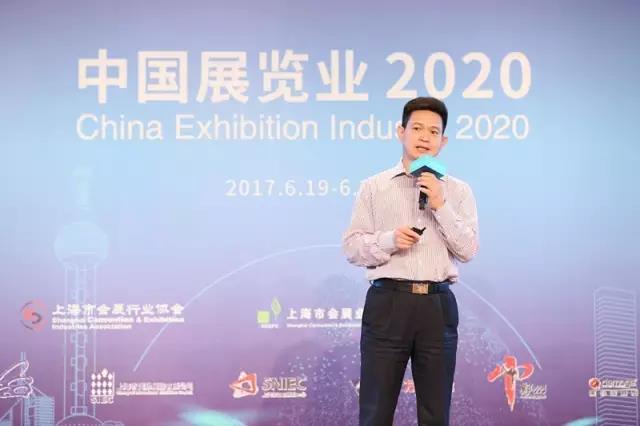
Speech time: afternoon of June 19, 2017.
Speech theme: Better playing the role of government: transformation of government exhibitions.
Speaker: Zhang Xueshan, chairman of Zhenwei Exhibition.
Key points:
Government-run exhibitions have positive significance. First, they help build a city's brand and expand social benefits. Second, they can drive local industries and expand investment promotion. Therefore, as a professional exhibition company, I still give government exhibitions credit.
If enterprises take over government exhibitions, more investment is required. First, evaluation is needed to see whether the government exhibition can align with our company's development strategy, whether we have the conditions to operate it well and develop it, and whether we can provide good service to the government. Zhenwei Exhibition has now taken over more than 20 government exhibitions, mainly in industry, consumer goods, agriculture and strategic emerging industries. Our main work is to integrate exhibition operation tasks with our own advantageous resources to meet government needs. Usually, a road map is formulated at the outset and special planning is carried out, with the goal of achieving transformation after three to five years of operation.
When enterprises take over government exhibitions, government departments can devote more energy to supervision, monitoring and regulation of the overall exhibition project and development, jointly improving the political, social, economic and environmental benefits of the exhibition.