
Author introduction:
Xu Runhe, then deputy director of the Theme Pavilion Department of the Bureau of Shanghai World Expo Coordination, was mainly responsible for planning the exhibition content of the Shanghai World Expo Theme Pavilions, including the Urbanian Pavilion, Pavilion of City Being, Pavilion of Urban Planet, and Pavilion of Future, as well as managing exhibition design, exhibition construction, operation during the Expo period, and dismantling after the event. In December 2010, Xu was honored by the CPC Central Committee and the State Council as an Advanced Individual of the Shanghai World Expo.
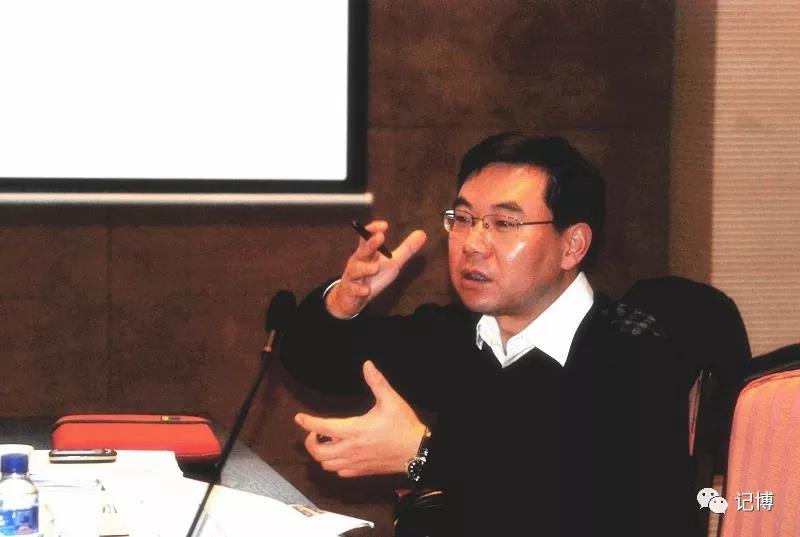
Interpreting the Themes of the Theme Pavilions
Xu Runhe
Today, with joy, we sit together and talk freely about the Expo road we once traveled. Although the Shanghai World Expo has already closed, I still feel a bond that is hard to let go. A century-old Expo dream was realized in one moment. As one of the builders of the Theme Pavilions, I feel deeply proud. This was an opportunity and a source of pride for our generation. To achieve the goal of a successful, splendid, and unforgettable Shanghai World Expo, we personally went through many hardships. Looking back now at the work of the Theme Pavilions, I would like once again to present the appeal of their preparation process and share it with everyone.
As everyone knows, the Theme Pavilions were among the core venues of the Shanghai World Expo. They were the most concentrated and typical interpretation and expression by the organizers of the theme Better City, Better Life. When visitors entered the Theme Pavilions, they could understand the Expo's theme more directly. As Vicente Gonzalez Loscertales, secretary general of the Bureau International des Expositions, wrote in the preface to the book Global Perspectives, Lighting Up the Theme, compiled by our Theme Pavilion Department, the theme is the key factor that gives World Expo displays importance and relevance. The most important task of Expo organizers is to guide participants in following and interpreting the Expo theme well. Theme pavilions are the backbone and main axis for interpreting the Expo theme. They disseminate the core message of the Expo and become an important vehicle for public education. Without theme pavilions, Expo displays would lose their coherence and appeal. Although the wonderful experience brought by the Theme Pavilions during the Expo was temporary, we fully believe that they made an important contribution to interpreting and explaining the theme of the Shanghai World Expo.
I still remember September 2007, when I learned that I would join the Expo Bureau and take part in exhibition and display work for the Shanghai World Expo. I had many concerns. One reason was that I had no experience with this special type of Expo display work, so whether I could shoulder such responsibility was unknown. China was holding a World Expo for the first time, and the people involved in organizing it had no Expo experience. We had to explore, learn, and innovate continuously. At the Bureau of Shanghai World Expo Coordination, I was mainly responsible for developing Theme Pavilion exhibition content, managing exhibition design, managing exhibition construction, implementing operation plans, and dismantling after the exhibition.
To ensure that all Theme Pavilion work proceeded in an orderly way, the first task was to clarify the project path for exhibition planning, design, construction, and implementation. This work was roughly divided into four stages. The first was theme definition, clarifying the core ideas the organizers wanted to convey through each pavilion. The second was exhibition concept planning, clarifying the main conceptual structure, major content sections, and basic display methods for the five Theme Pavilions. The third was exhibition design, which could be further divided into concept solicitation, concept design optimization, and detailed exhibition design. The fourth was project implementation, namely preparation and installation. This mainly included collecting and producing exhibits and exhibition items, producing scenes, selecting, procuring, and developing display technologies and equipment, entering the venue for installation, interior fit-out, multimedia equipment commissioning, and trial operation.
In this process, we also faced three major questions. First, what content could reflect the organizer's interpretation and expression of Better City, Better Life, and achieve a splendid and unforgettable result in presentation and understanding? Second, how should we select implementation teams suitable for the construction of the Theme Pavilions? Third, what management system should be adopted to ensure the construction of the Theme Pavilions?
Looking back, such a large-scale Theme Pavilion construction project involved complicated work and many difficulties. I can only recount some fragments.
Understanding the World Expo
I still clearly remember April 2008, when I followed Deputy Director Chen Xianjin of the Expo Bureau on a special trip to Europe to communicate with foreign teams in the Netherlands, Germany, and Spain. During that visit, our daytime schedule was filled with meetings, and at night we had to write meeting minutes and prepare for the next day's meetings. Through this investigation and exchange, I gradually gained a clear understanding of the World Expo. I came to know what characteristics an Expo should have, learned advanced experience in preparing for an Expo, and clarified an important definition: a World Expo is a display activity characterized by large visitor flows and fast-paced visiting methods that conveys exhibition content while also encourages visitor reflection.
For example, why did the Shanghai World Expo Theme Pavilions not experience long queues during operation? It was precisely because I recognized early on that an Expo involves high-volume visitor flow. At the beginning of design, I worked with experts from Tongji University's College of Transportation Engineering to simulate and plan visitor routes for the Theme Pavilions, scientifically analyzing passage widths, waiting areas outside the venues, and other issues, and designing different batch-processing and flow-processing methods for different exhibition items. During the 184-day operating period of the World Expo, the five Theme Pavilions received a total of 29.75 million visitors. In addition, the exhibition content of the Theme Pavilions could not be too complicated, and the grand shows of individual exhibition items could not be too obscure. The content had to be profound yet easy to understand, allowing visitors to understand it while walking and reflect on it. Expo displays differ from traditional static exhibitions. They should not require visitors to focus on one item as in a museum, but should adopt an edutainment-style display method. The trip to Europe therefore gave me a clearer understanding of the definition of the World Expo, the implementation path of the work, the timetable for overall planning, the content of each work stage, and the results and goals we needed to achieve.
Selecting the implementation team
During the optimization design stage of the Theme Pavilion plan, many foreign teams were involved. From the start of the project I had a sense that, although these foreign teams were ahead of us in content and design, the project would ultimately be implemented in China, and they might not understand Chinese industry standards in later design work. Therefore, in the detailed design stage, I deliberately arranged for Chinese and foreign teams to advance the work together to ensure smooth implementation of the plan. I had already begun preparing for this work in June 2008, conducting nationwide investigations and organizing comparisons before finally determining the general contractor teams for the five Theme Pavilions. In July 2008, I gradually shifted my focus to communication with the design teams on detailed design. At this stage, we upheld the principle of design first. The main body of the project was the design team, namely the foreign side, while the contractor teams played a supporting role. After entering the construction stage, I reversed the positions: the construction side became the main body, while the design side provided artistic supervision and support. This arrangement created checks and balances at different work stages and also met the organizers' requirements for control over content and effect.
Tight schedule, heavy tasks, and difficult management
From the start of concept design solicitation in August 2007 to the final confirmation of the detailed design plan in May 2009, the process lasted a full year and nine months. In other words, only in October 2009 did the Theme Pavilions officially enter the exhibition construction and installation stage. By the end of March 2010, in only six months, we had fully completed all exhibition installation work for the venues. On April 20, the pavilions participated in all six trial-operation exercises in the Expo site. On May 1, the Expo opened officially and the pavilions operated smoothly. It can be said that we created a Chinese miracle under circumstances that foreigners considered impossible.
An exhibition project is an integrated multidisciplinary and multi-specialty project, not simply pure artistic creation or decoration. Its basic characteristic is that it integrates multiple specialties within a specific space to create a visual experience, express thematic ideas, and resonate with and inspire visitors. It covers many specialties, mainly in three aspects. First is structural foundation, including building structure, mechanical and electrical systems, HVAC, integrated wiring, security and fire-protection systems, and others. Second are exhibits and exhibition items, including physical exhibits, graphics and text, and film script preparation. Third are technical equipment, including audio, video and lighting equipment, multimedia integration, coordinated commissioning, and related work. In addition, it involves determining technical feasibility, creating operation conditions, and controlling budget and schedule. If work in one stage is not properly controlled, it will create obstacles for the next stage. All aspects must be organically and orderly coordinated at different stages. This is extremely complex systematic work, and no single team could support all of it simultaneously. Therefore, the design work of the Theme Pavilions was completed through division of labor and cooperation among professional teams from the Netherlands, Germany, Spain, and various provinces and municipalities in China. This working method also brought the issue of coordinating cultural differences between foreign and Chinese design teams, which was a demanding task for our management team.
On October 1, 2009, we formally entered the site for construction and exhibition installation. In fact, as early as September, we had already been preparing for site entry. I divided the entire construction stage into three parts. The first was construction and installation of basic structures. The second was decoration and exhibits and exhibition items. The third was equipment installation and coordinated commissioning. The schedule was tight, the tasks were heavy, and coordination was large and difficult. Every aspect was a major challenge. By the end of March 2010, all exhibition works for the four Theme Pavilion buildings were completed.
Whether renovating old factory buildings or building pavilions within a newly constructed Theme Pavilion, we encountered many non-standard structures during construction. Even under such conditions, within limited space we successfully completed high-intensity exhibition foundation construction, including the entry, lifting, and welding of large steel structural components. According to statistics, the exhibition foundation steel used in the five Theme Pavilions totaled 6,500 tons, setting a record for a single exhibition construction project. That period was truly painful. I remember that my leather shoes were covered with dust every day. There was a shoe brush in the office, and I brushed them every day. Yet as the dust on my shoes gradually decreased, it also meant the work was progressing better and better.
At that time, each pavilion held an engineering meeting every week. Four half-days each week were spent on engineering meetings alone, not including special meetings on problems in each pavilion or various meetings at the business and management levels. I remember that the average number of work meetings reached about twenty each week. I slept in the office at night and signed off on meeting minutes. I deeply experienced what it meant to work five plus two and day plus night. It is no exaggeration to describe the work as extremely difficult and like walking on thin ice. Chinese and foreign design teams, experts from various professional fields, and relevant departments of the Expo Bureau went through many sleepless nights and overcame numerous difficulties, all to complete the construction of the Shanghai World Expo Theme Pavilions with quality, quantity, and punctuality guaranteed.
Collecting global cases
The content of the Theme Pavilions needed to reflect international consensus and use international materials and an international language for planning and design. In specific implementation, the exhibition content of the five Theme Pavilions needed to use global examples to support the expression of their respective themes. Some were urban humanistic documentaries, some expressed the spiritual characteristics of cities, some were cases of urban environmental protection, some presented thoughts and visions about the future of cities, and others involved collecting global cultural relics that could reflect the trajectory of urban development. With so many global cases gathered in the five Theme Pavilions, we fully considered differences in cultural backgrounds and the expressive power of display carriers in specific use. From a pluralistic perspective and with an interactive and coordinated attitude, we drew on strengths, avoided weaknesses, respected one another, and jointly interpreted the urban theme of the Shanghai World Expo, meeting to the greatest extent the expectations of the BIE and visitors for the Theme Pavilions.
For example, to help visitors better understand why people enter cities in pursuit of a better life and to understand the real lives of urban residents, we selected six real families in six cities on six continents as filming subjects. By tracking and collecting images of these families, we embedded and threaded their image stories through the Urbanian Pavilion to tell stories of people in cities. In the Pavilion of City Being, we selected five squares in five cities around the world and filmed five stories of searching. In Hanwang Square in Wenchuan, China, one story described a child finding a Chinese chessboard in the ruins and then placing it before his father's grave, imagining that he was playing chess with his father. This reflected the spirit of the Chinese people as open-minded, resilient, and self-strengthening, and sought at a spiritual level to express the idea that cities, like living organisms, need the joint care of all humanity. Visitors on site were deeply moved.
Using prototypes to ensure results
For the Blue Planet exhibit in the Pavilion of Urban Planet, the initial plan included a bridge called the Bridge of Consciousness. When I went to Berlin in 2008, I told the German team responsible for the pavilion's planning and design that the bridge was inappropriate. First, there were safety issues. The bridge would become a bottleneck in the Pavilion of Urban Planet. Many visitors would directly look down at the Blue Planet image, causing the entire pavilion's visitor flow to become batch processing rather than flow processing. Once batch processing occurred, absorbing visitor flow would be very challenging. From a technical perspective, because the bridge passed over the top of the Blue Planet, there were technical difficulties with projection distance, brightness, and overall image stitching, and the budget would also increase. However, the foreign design team insisted on the bridge. Later, we made a prototype and let the effect speak for itself. During prototyping, we built scaffolding at a one-to-two scale for simulation. We placed an inflatable airbag in the middle. According to the technical requirements at the time, we had two choices for the sphere: projectors or LED. In the end, during prototyping, I chose projectors, because LED uses light-emitting diodes and it is difficult for LED to present images delicately, while projectors have that advantage. After the Bridge of Consciousness prototype was made, because it was at a one-to-two scale, only one-fifth of the sphere could be seen, making it impossible to see the entire spherical surface completely. Through prototyping, I obtained first-hand data: the bridge had to be cancelled. This example fully shows that prototyping provided a very practical basis for decision-making.
Equipment procurement methods
Another major difficulty in the project implementation stage concerned equipment. At that time, the actual use of funds for the Theme Pavilions had already exceeded the budget. Considering that the equipment would be used for only 184 days, there was no need to purchase it as fixed assets. When we selected high-lumen projectors, we approached two suppliers, Barco and Christie. Because Barco proposed very strict cooperation requirements and did not provide leasing, we turned to Christie and considered renting its equipment. A projector meeting the Theme Pavilion display requirements cost about RMB 700,000 to purchase, while the rental price was only RMB 320,000 per unit, including operation costs. We immediately organized a comparison and selection, and the Supervision and Audit Department of the Expo Bureau also approved our plan. Christie was unanimously selected. Referring to this cooperation model, all projection equipment for the Theme Pavilions was leased, and the audio equipment was sponsored free of charge by Soundking. According to estimates, leasing, sponsorship, and discounted treatment of equipment alone saved more than RMB 50 million from the overall Theme Pavilion budget.
Leadership attention and support
As one of the venues built by the organizers, construction of the Theme Pavilions always received great attention from leaders at all levels. Whether in the design stage or the construction stage, the work received careful guidance and strong support from the Organizing Committee and the Executive Committee. After the Theme Pavilions began operation, they received many leaders at various levels and won broad praise for content interpretation, exhibition design, exhibition construction, and operation services.
Conclusion
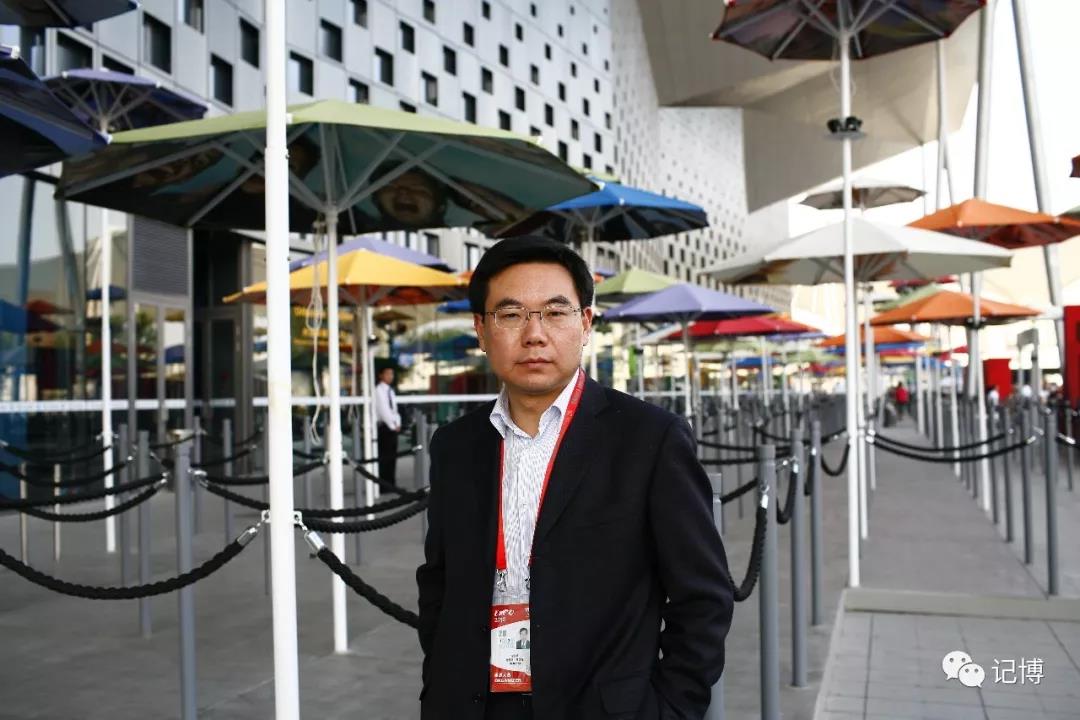
When I saw the Theme Pavilions turn from drawings into reality, when I saw them change from empty darkness into brilliant colors, when I saw my team members move from exhausted faces at work to bright smiles on opening day, and when I saw the Shanghai World Expo from the first visitor entering the Theme Pavilions on opening day to the last visitor reluctantly leaving on the closing day, all of this filled me with many feelings. I will remember those days and nights of hard work. They were full of hardship yet also full of excitement, and they are unforgettable.
On December 27, 2010, I was honored to attend the commendation conference for Expo 2010 Shanghai China at the Great Hall of the People in Beijing and received the title of Advanced Individual of the World Expo. This was the country's recognition of my work for the Shanghai World Expo. At that moment, I was deeply moved and filled with emotion, recalling scene after scene from nearly four years of work on the Shanghai World Expo. From knowing little about the World Expo four years earlier to gaining so much experience now, the Expo work experience made me grow.
The Theme Pavilions responded to and interpreted how cities make life better. We were the builders of the Theme Pavilions, and likewise, we were responding to and interpreting our own lives. With the World Expo, our lives also became more splendid and unforgettable.