Afternoon of June 21
Topic: How Chinese exhibition enterprises organize exhibitions overseas
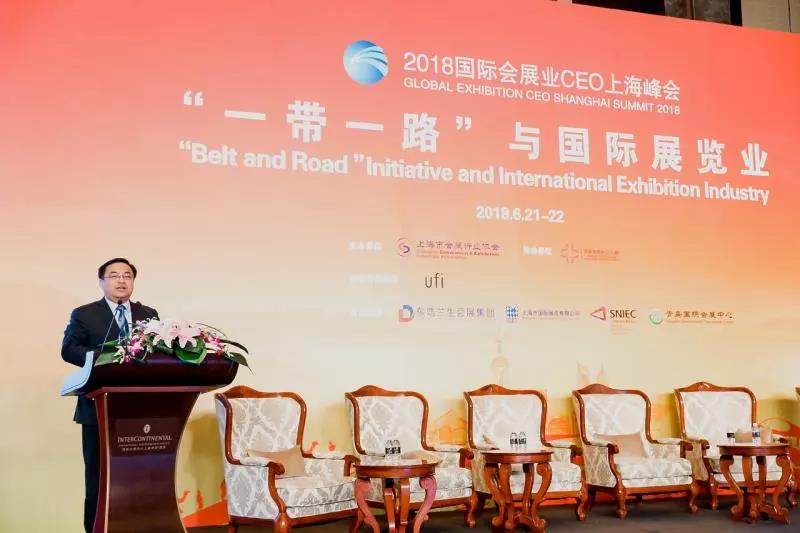
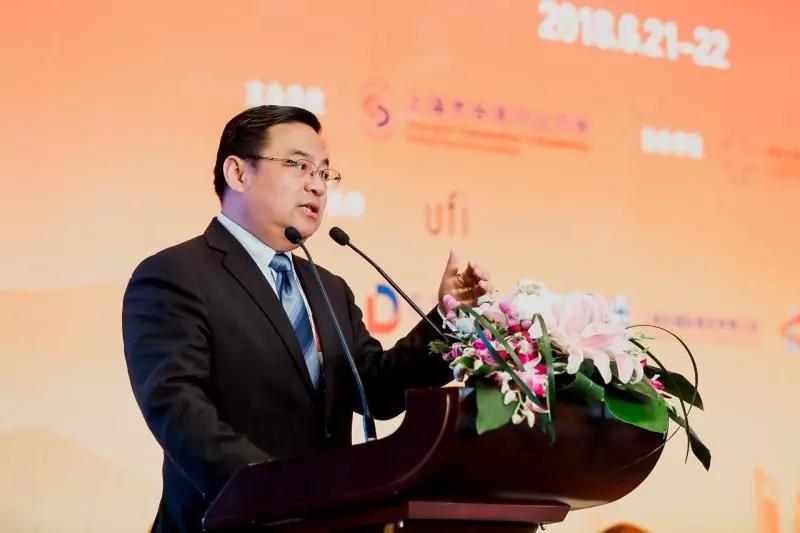
Speaker: Pan Jianjun, chairman of Meorient International Exhibition.
The meaning of going global
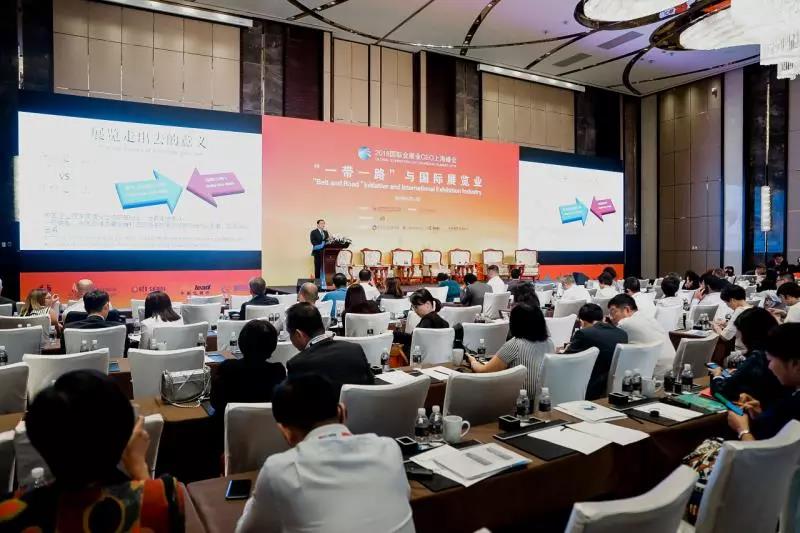
In the past, Chinese exhibition companies mainly organized Chinese enterprises to participate in international exhibitions, which was like borrowing a ship to go overseas. Now Chinese manufacturing is transforming into Chinese brands, and the industry has reached the stage of building its own ships to go overseas. Therefore, exhibition companies also need to organize exhibitions abroad, which means building platforms to go global. These two forms of going global have different efficiency for Chinese enterprises.
Over the past four years, the number and scale of exhibitions organized by Chinese companies overseas have continued to rise. There are three main types. The first is independent exhibitions under fully self-owned brands, which account for a very small share. The second is cooperative exhibitions, in which domestic exhibitors are organized and a local operator is found for joint operation. This type currently accounts for almost half. The third is exhibitions within exhibitions, a special format in which a Chinese company creates an independent section within an overseas exhibition and organizes companies to participate under the name of a specific Chinese themed exhibition.
Overseas exhibitions and Belt and Road exhibition organization
The countries and number of Chinese exhibitions organized under the Belt and Road framework account for almost half of China's self-organized overseas exhibitions. Last year, the number of self-organized exhibitions in Belt and Road markets declined slightly, while exhibition scale increased.
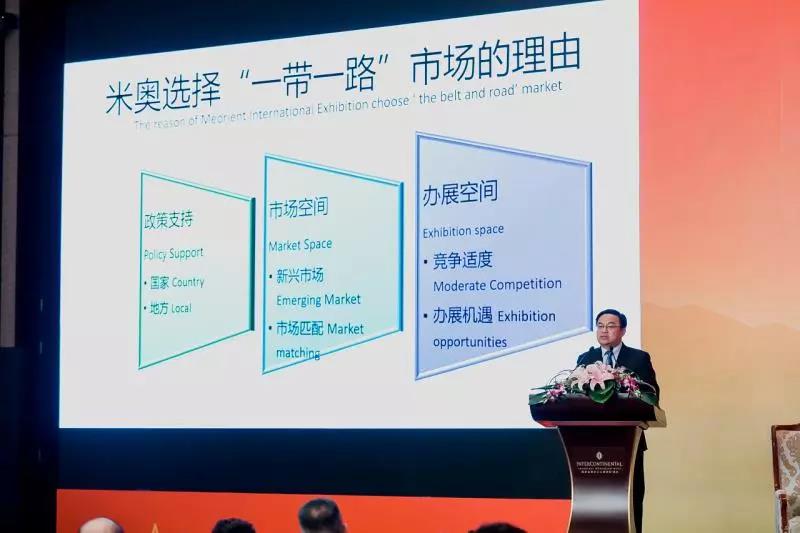
There are several reasons for choosing Belt and Road markets. First is policy support. The Belt and Road is a national strategy, and support from the central to local governments is relatively strong and generally implementable. Second is market space. Most countries along the Belt and Road are emerging markets for China's foreign trade, and most Chinese enterprises' products have a high degree of compatibility in these markets. Third is exhibition space. Competition in some Belt and Road countries is moderate, similar in some cases to China's domestic exhibition competition environment in the 1980s and 1990s, so there are more exhibition opportunities.
Risks of organizing exhibitions overseas
Political risk is one major factor. Several years ago, Meorient decided to organize an exhibition in the United States, but after the change in the U.S. administration and the start of trade friction with China, the plan was shelved. This year, just after the venue contract had been finalized, circumstances changed again, and the 2019 plan again appeared unlikely to proceed. Another example was Iran. The first exhibition there was very effective, but when preparations for the second edition began, tensions between the United States and Iran intensified.
Policy risk is another factor. China's outbound exhibition management measures were issued on May 14, 2006 and were designed from the perspective of foreign affairs administration. Only about 200 organizations have outbound exhibition qualifications. This is not the biggest issue; overseas policy risk is greater. Policies in many Belt and Road countries change frequently. In one country, while exhibition setup was proceeding normally, a new policy was suddenly introduced requiring security checks on all Chinese exhibitors, and all construction workers were barred from entering the venue. The Chinese embassy played an important role, and only on the final day was the inspection completed. The team completed setup overnight. Organizing exhibitions overseas requires strong nerves and the ability to bear great pressure. In another country, customs suddenly added rules requiring focused inspection of certain products, and spot checks were very slow. After the freight company received the goods, it found that many items were missing.
Venue risk also exists. In one country, Pan received notice while on the plane that the local exhibition venue had been taken over by the military. Through urgent coordination by the embassy, another venue was used. The exhibition was shortened from three days to two days, with 12 hours each day and only one night for setup. Such situations are rarely encountered domestically.
Market risk can be equally serious. Several years ago, Brazil, as a BRICS country, had a very good market, and five Chinese organizations held exhibitions there. Later, Brazil's economy declined sharply, its currency depreciated quickly, exhibition results fell rapidly, and overall market purchasing power dropped. Among Chinese exhibition organizers, only Meorient remained in that market. For Belt and Road exhibitions, opportunities and risks coexist, and the risks differ from what is usually imagined at home.
Experience in organizing exhibitions
Meorient has held 25 exhibitions in 13 countries overseas, with a total area of 180,000 square meters and overseas exhibition revenue of RMB 1.03 billion. Its projects are mainly concentrated in home life and industrial manufacturing. Fourteen of its exhibitions have received UFI approval. Several points are worth sharing from years of experience.
First, organizing an overseas exhibition is not merely assembling booths; it requires curation. Many Chinese companies think overseas exhibitions only require visiting several provinces to recruit companies and finding a local chamber of commerce abroad. In fact, overseas exhibition organization requires understanding market matching, planning, resource integration and true implementation.
Second, exhibitor recruitment and buyer invitation are different. An organizer may outsource exhibitor recruitment for an exhibition, but buyer invitation cannot be outsourced. Every Chinese enterprise going global must understand that buyer invitation is the most important part of the entire exhibition.
Third, overseas exhibitions require not only financial investment but also human investment. Meorient currently has 72 overseas staff members who work year-round on visitor and buyer organization. Overseas exhibitions are therefore not simply a matter of financial input or running some advertising.
Fourth, early investment is large. Some capital investors have questioned why Meorient's current net profit is not high. Last year, the company's revenue was RMB 430 million and profit was more than RMB 50 million, with a profit margin of about 10 percent. Several major listed international exhibition companies have profit margins above 50 percent. The reason is that Meorient currently has only 15,000 square meters of global exhibition area; if it reaches 100,000 square meters, the profit margin will rise significantly. At present, the company is mainly investing in quality and visitors to build long-term business.
The core issue is how to break through the bottleneck of visitor organization. For overseas exhibitions, the first key capability is local visitor organization, and the second is independent local operation. If these two capabilities are achieved, exhibitions can become sustainable and long-term. This is Pan's experience.
Future strategy
Meorient plans to incubate 10 professional themed exhibitions on each of its two platforms, home life and industrial manufacturing, and hopes to develop 200 to 300 exhibitions worldwide. It plans to do this through three paths.
First, it will build its own teams for incubation. The company currently has a global team of 500 people, with a target of 1,000, to build the capability to run global series exhibitions in selected industries. Second, it will build exhibitions through cooperation. Meorient is actively communicating with domestic professional organizers and hopes to jointly organize overseas branded exhibitions by combining its overseas operating capability and visitor organization capability with the capabilities of domestic professional organizers. Third, Meorient will invest in and acquire excellent domestic exhibition projects, hoping to use its capital-market capability and the experience accumulated in the listing process to help acquired projects enter overseas markets.
The relationship with future partners will mainly be strategic cooperation. Meorient's strategic investment will help enterprises improve their business models and enter global markets.