
Source: original content from China Economic Net.
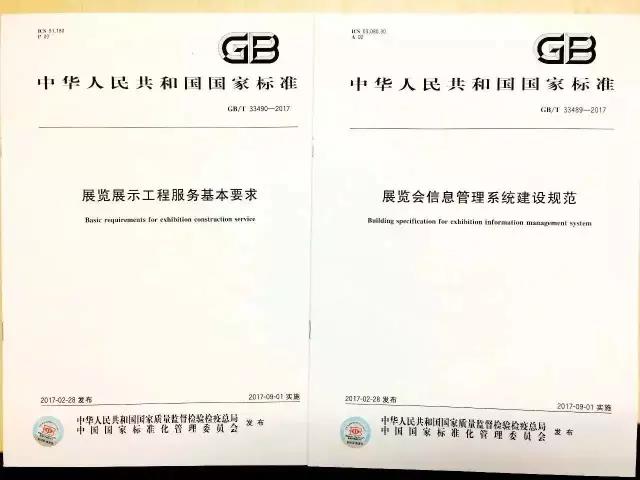
Recently, the General Administration of Quality Supervision, Inspection and Quarantine and the Standardization Administration of China released two national standards: Specification for the Construction of Exhibition Information Management Systems and Basic Requirements for Exhibition Display Engineering Services. To further interpret these two important national exhibition standards and their impact on China's exhibition market, Exhibition China interviewed Chen Xianjin, director of the National Technical Committee for Exhibition Industry Standardization and president of the Shanghai Convention and Exhibition Industries Association.
Exhibition China: Please talk about the positive significance of the two newly released standards.
Chen Xianjin: The release of Specification for the Construction of Exhibition Information Management Systems is intended to implement the requirement in Several Opinions of the State Council on Further Promoting the Reform and Development of the Exhibition Industry, namely to guide enterprises in using modern information technology, carrying out service innovation, management innovation, market innovation and business model innovation, and developing emerging exhibition formats. It will strengthen integration between the exhibition industry and the information technology industry, promote the application of information collection, connectivity and sharing technologies in the exhibition industry, and provide basic support and guidance for the construction of exhibition information management systems. By improving the informatization and standardization level of exhibition companies, it will help raise the informatization level of China's exhibition industry and improve the management and operational efficiency of exhibition companies. It is also conducive to effective data sharing and full data utilization by exhibition companies.
The release of Basic Requirements for Exhibition Display Engineering Services is intended to implement the requirement in Several Opinions of the State Council on Further Promoting the Reform and Development of the Exhibition Industry, namely to improve the exhibition industry chain, strengthen coordination among upstream and downstream enterprises, and drive the development and growth of various exhibition service enterprises. It will improve the service capabilities of exhibition display engineering enterprises, meet customer requirements for exhibition display engineering services, standardize responsible project entities and specific service processes, create sound behavioral norms for industry enterprises, eliminate safety risks, improve project quality and service levels, and promote the healthy development of the exhibition display engineering service industry.
Exhibition China: How were the drafting organizations and drafters selected and determined when the two standards were formulated? What was the specific development procedure?
Chen Xianjin: The formulation and revision of China's national standards must proceed in an orderly manner in accordance with the Measures for the Administration of National Standards. These measures clearly stipulate how national standard projects are generated and how national standards are formulated. The exhibition standards committee has always strictly followed these rules in managing standards under its jurisdiction.
For standard project approval, the general process is as follows.
1. The exhibition standards committee releases guidelines for national standard project applications in the exhibition industry.
2. Organizations with capability and foundation submit national standard project proposals based on preliminary research or practice.
3. The exhibition standards committee organizes evaluation of the submitted projects, comprehensively considers national policies, industry needs and the technical capabilities of the applicants, and then determines the projects to be submitted.
4. The exhibition standards committee submits the project application to the Standardization Administration of China.
5. After the Standardization Administration of China organizes project evaluation and public notice, it formally issues the national standard project plan.
After a standard is formally approved as a project, the responsible drafting organization leads the drafting work and may appropriately add or reduce drafting organizations as needed to ensure the scientific nature, advancement and broad applicability of the standard.
After drafting is completed, the standard must go through broad solicitation of comments, review by the technical committee and submission for approval. It can be formally released only after final approval by the Standardization Administration of China.
Exhibition China: What problems do you think still exist in China's exhibition display services and exhibition information management? What role do you hope these two standards will play in the industry?
Chen Xianjin: Exhibition display services and exhibition information management are both important supporting services for exhibition activities. Their quality and efficiency play an important role in promoting the healthy development of the exhibition industry. There is indeed room for guidance and improvement in both areas. We hope that, starting with these two standards and a group of related standards, we can on one hand promote the popularization and application of information technology in the convention and exhibition industry and guide Internet Plus Exhibition to develop in greater depth, and on the other hand promote exhibition display engineering enterprises to improve management level, professional competence and service capability, raise the service level of exhibition display engineering, and better meet the needs of exhibition activities.
Of course, these goals cannot be achieved overnight. The release and implementation of the two standards is only a beginning. On one hand, the expected functions of the standards must be realized through broad application. On the other hand, related standards are also needed to jointly form a comprehensive standard system and produce systemic effects. Therefore, the exhibition standards committee has also promoted the drafting of several related standards. I believe that with the release of other standards in the future, the benefits of standards will be better reflected.
Exhibition China: After the standards officially take effect on September 1, what measures will the exhibition standards committee take to promote smooth implementation?
Chen Xianjin: According to China's standardization laws, regulations and policies, the national standards completed by the exhibition standards committee are currently recommended national standards. Therefore, their effectiveness is not realized through compulsory measures. The driving force for implementation comes partly from the internal needs of industry development, namely the requirements of organizers, contractors, venue operators and other relevant parties for exhibition display engineering services and exhibition information management services. It also comes from the scientific nature and applicability of the standards themselves, and from their practical role in improving quality and efficiency. Regarding the relationship between standards and quality, both President Xi Jinping and Premier Li Keqiang have made clear statements, so I will not repeat them here. The scientific nature and applicability of the standards themselves have always been a particular focus for the exhibition standards committee during the formulation process.
The exhibition standards committee will also adopt multiple measures to promote implementation and application of these standards. For example, it will encourage industry authorities to incorporate these standards into institutional arrangements when conducting industry guidance and support work, use multiple channels to organize standard publicity and training activities, promote industry enterprises' understanding and awareness of the standards, and work with local exhibition industry associations and exhibition offices to advance implementation.
So far, China has released and implemented six national standards for the convention and exhibition industry. They are:
GB/T 26165-2010 Economic and Trade Exhibition Terminology
GB/T 30520-2014 Classification and Terminology of Conferences
GB/T 30521-2014 Economic and Trade Exhibition Data Statistics
GB/T 31082-2014 Rules for Exhibition Data Audit
GB/T 33489-2017 Specification for the Construction of Exhibition Information Management Systems
GB/T 33490-2017 Basic Requirements for Exhibition Display Engineering Services
In addition, two national standards have already been submitted for approval, both under the jurisdiction of the National Technical Committee for Exhibition Industry Standardization, referred to as the exhibition standards committee.