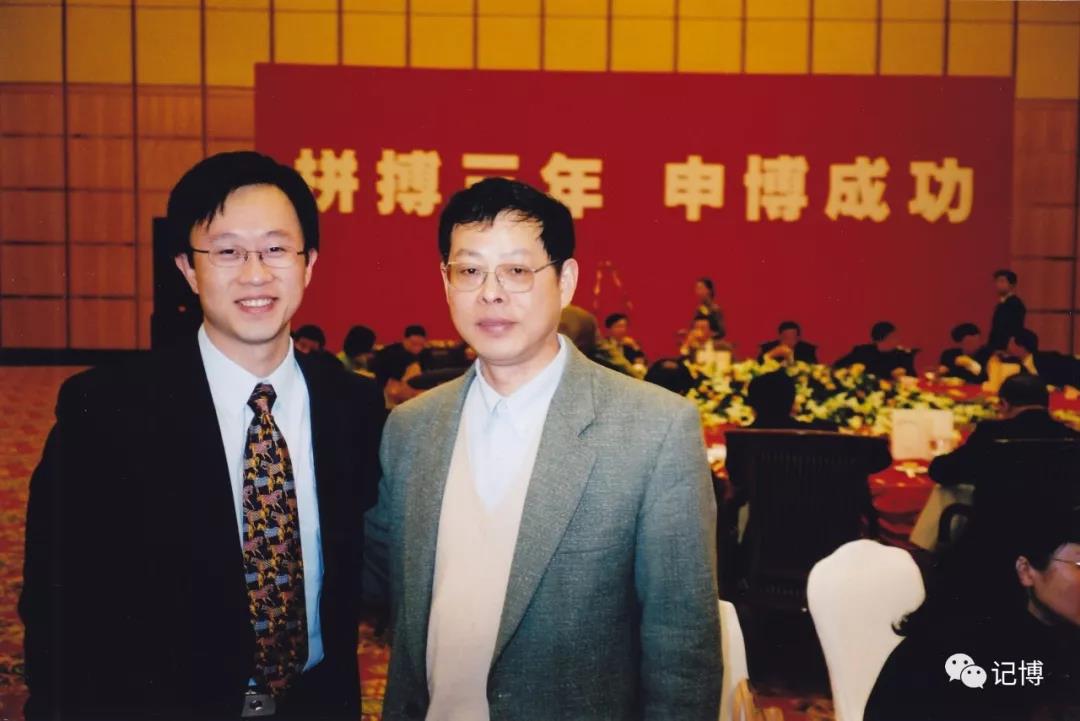
Yu Sijia, left, then head of the planning division of the Shanghai Urban Planning Administration Bureau and Chinese liaison for the Cergy-Pontoise project.
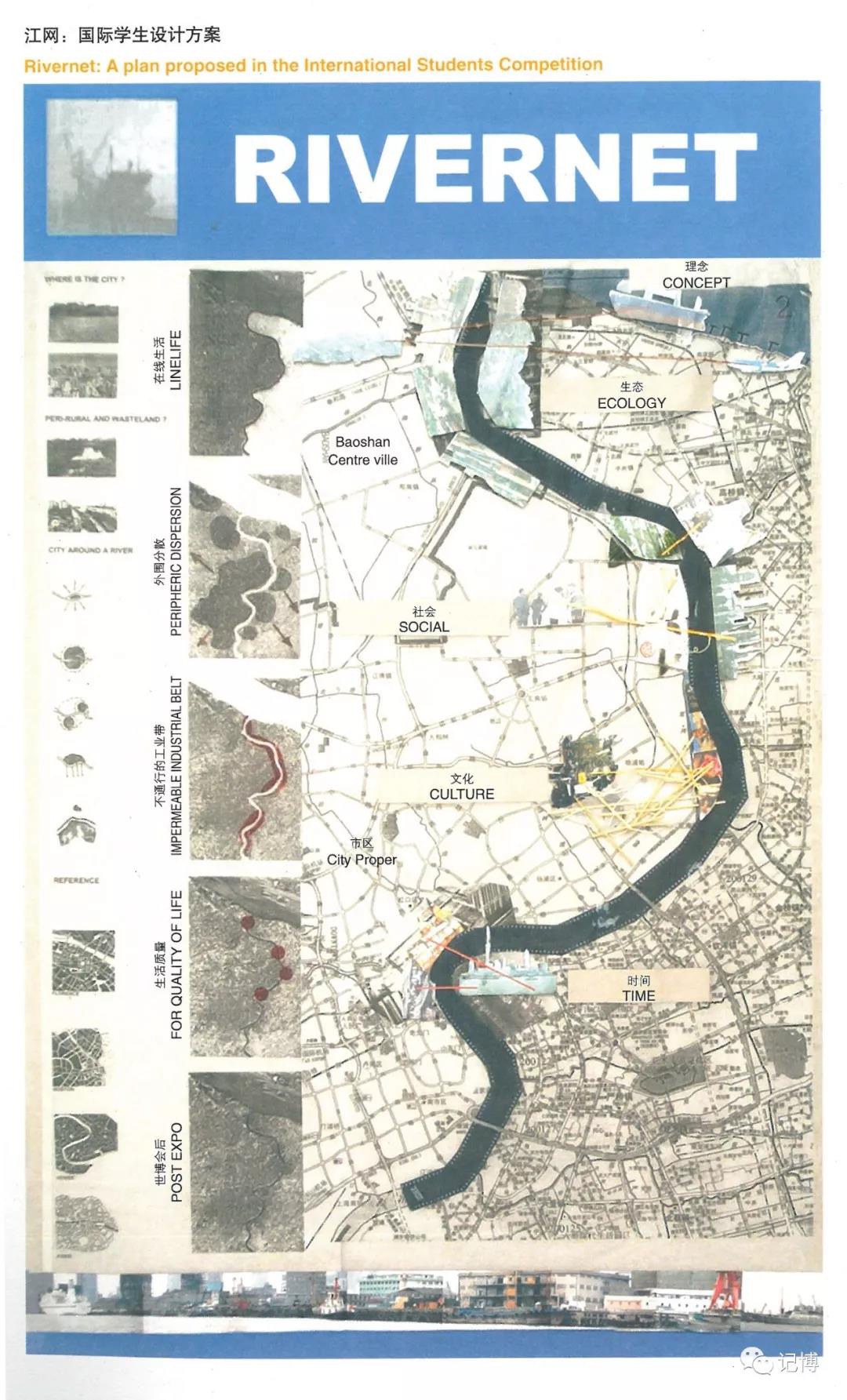
River Net, a proposal for the site selection of the Shanghai World Expo park, was put forward during the competition.
Eighteen Years Ago, Chinese and Overseas University Students Competed and Offered Ideas for Shanghai World Expo Site Planning
Ji Lude, October 30, 2018.
In the 1980s, former mayor Wang Daohan once considered bidding for the World Expo. When relevant departments conducted preliminary feasibility studies, they once considered building the Expo park in Huanglou, Pudong, and other areas. In April 2000, when the municipal government invited the president and secretary-general of the Bureau International des Expositions to Shanghai for the 10th anniversary of Pudong's development and opening-up, they were also taken to visit the Huanglou area. But the Shanghai World Expo park was ultimately located on both sides of the Huangpu River. Many factors contributed to that decision, one of which was an international urban planning competition held in Shanghai in the autumn and winter of 2000.
Eighteen years ago today, on October 30, 2000, an international urban planning design competition and seminar jointly organized by the Shanghai Urban Planning Administration Bureau, Tongji University, the Shanghai Urban Planning and Design Research Institute, the Shanghai World Expo Bid Office and France's University of Cergy-Pontoise opened in Shanghai.
The University of Cergy-Pontoise in France jointly organizes an urban planning design competition and seminar with a city in a different country every year. In March 2000, former French housing minister Pierre-Andre Perissol, accompanied by the French Consulate General in Shanghai, met with Shanghai vice mayor Han Zheng to discuss Sino-French cooperation in planning and design. The Shanghai Urban Planning Administration Bureau submitted a special report to the municipal government general office and proposed ideas for the cooperation project. As a member of the leading group for Shanghai's bid for the 2010 World Expo, the planning bureau keenly seized this opportunity. It hoped to collect Expo planning proposals worldwide, enhance Shanghai's influence in bidding for the Expo, and at the same time use the collision of planning concepts among professionals and scholars from different cultures, backgrounds and qualifications around the world to keep Shanghai ahead of competitors in Expo planning and design. The bureau proposed that the theme of the activity be Conceptual Planning and Design for the 2010 Shanghai World Expo.
At the bid leadership level, there was another consideration: France had considerable influence in the Bureau International des Expositions. If the event was initiated by the French side and Shanghai responded actively, it could produce win-win results. Therefore, the Shanghai World Expo Bid Office decided to use the opportunity to invite relevant figures to visit Shanghai. Those who were invited and made the trip included Testu, then BIE vice president, chair of the BIE Executive Committee and French representative to the BIE; Ferreira, chairman of the Lisbon Expo 1998 company; Ichiro Tsubota, an official from Japan's Ministry of International Trade and Industry office for Expo promotion; and Ippei Takeda, senior adviser to the Japan Association for the 2005 World Exposition.
On May 10, 2000, B. Warnier, secretary-general of the urban planning design studio of the French university, visited Shanghai and held in-depth discussions and site inspections with the Shanghai Urban Planning Administration Bureau, Tongji University and the Shanghai Urban Planning and Design Research Institute. On May 16, the Chinese and French sides signed an agreement to jointly hold the international urban planning design competition and seminar in Shanghai from October 30 to November 25 under the name Fourth Asian Urban Planning Design Exchange and Competition, with the theme Conceptual Planning and Design for the 2010 Shanghai World Expo.
Participants were required to base their work on creating a first-class ecological environment for the 2010 World Expo, configuring modern engineering facilities and establishing a complete service system. Their designs were expected to integrate people and nature, history and culture with modern science and technology, combine exhibition facility construction with long-term regional development, discuss and anticipate the Expo theme, propose design concepts for the expression of the then-planned theme elements of city, environment and quality of life, explore new layout ideas that meet human and natural needs, and offer creative views on support systems such as transportation and services as well as the creation of natural ecological landscapes. The expression Better City, Better Life was determined on November 30, 2000.
On June 20, 2000, J. Milak, secretary-general of the French university, and Massonnat, responsible for Asian affairs, came to Shanghai again to discuss project details and finalize basic materials for the design competition, the approximate scale of the seminar and organizational arrangements. The French university was responsible for contacting design schools worldwide, selecting participants and forming design teams. The two sides agreed to invite 25 overseas experts and 10 Chinese experts. Organization and reception of participants and experts in Shanghai would be handled by the Shanghai planning bureau and Tongji University.
The agenda was as follows: from October 30 to November 5, selected participants would receive briefings and visit Shanghai; from November 6 to November 19, participants would design in groups; from November 20 to November 24, review and seminar activities would be held. The seminar topics were the planning requirements of the World Expo for venues, the impact of holding a World Expo on urban development planning, and consideration of post-event use of Expo venues. These were all issues Shanghai needed to consider during its bid.
On October 30, 2000, the Fourth Asian Urban Planning Design Competition, themed around conceptual design for the 2010 Shanghai World Expo, opened in Shanghai. Ariella Masboungi, chief planner of the French Ministry of Housing, attended the opening ceremony and gave an academic report. After the opening ceremony, 38 students from 26 universities in 14 countries formed six design teams. Each team combined Chinese and overseas students and spent two weeks planning and designing the Shanghai Expo site.
From November 21 to 24, the design competition reached its climax. On November 21 and 22, Chinese and overseas experts gave speeches on the World Expo and urban planning. On November 23, experts from various countries reviewed the works submitted by the six design teams. On November 24, the event closed, and Han Zheng, then member of the Standing Committee of the Shanghai Municipal Party Committee and vice mayor, attended the closing ceremony.
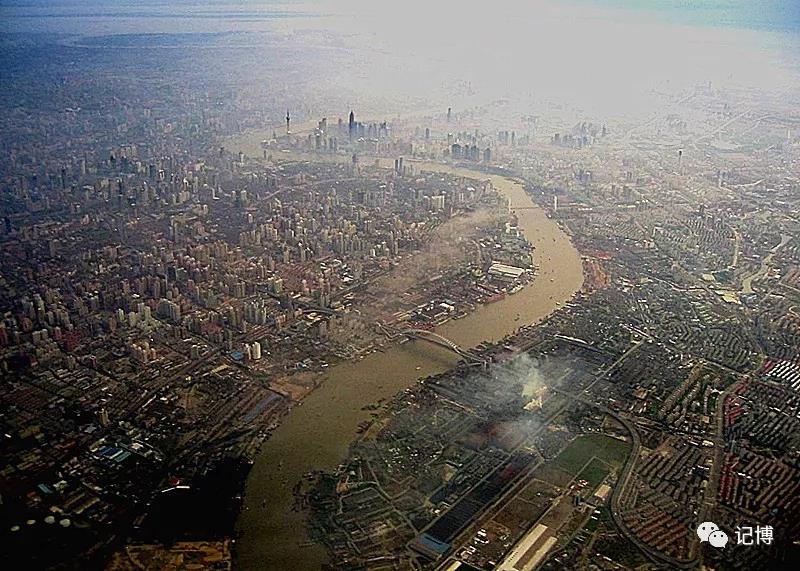
Of the six proposals produced by this event, five were based on the Huanglou site. Another proposal, called River Net, divided the Expo site into four parts located at four representative places along the Huangpu River from Minhang and Wujing to the mouth of the Yangtze River. Its meaning was that the Huangpu River reflected Shanghai's historical development from an ancient land of fish and rice to today's international metropolis. Visiting the Expo along the Huangpu River would be an experience of history. Water buses would connect the venues, highlighting the Huangpu River as Shanghai's mother river and presenting Shanghai's historical development in a romantic way, creating a colorful and fascinating World Expo. The proposal argued that site selection along both banks could properly reflect four dimensions of urban quality of life: ecological environment, social life, cultural tradition and spirit of the times.
This creative proposal received praise from international judges and attention from the organizers. However, because the Bureau International des Expositions does not allow Expo sites to be dispersed, the proposal did not win first prize and instead received a special award.
Afterwards, when Shanghai leaders met with French diplomats, the French side suggested placing the Shanghai World Expo by the Huangpu River. After many comparisons and careful consideration, by June 2001, city leaders decided to move the Shanghai World Expo site from the then-determined Huanglou area in Pudong to the current location between Nanpu Bridge and Lupu Bridge.