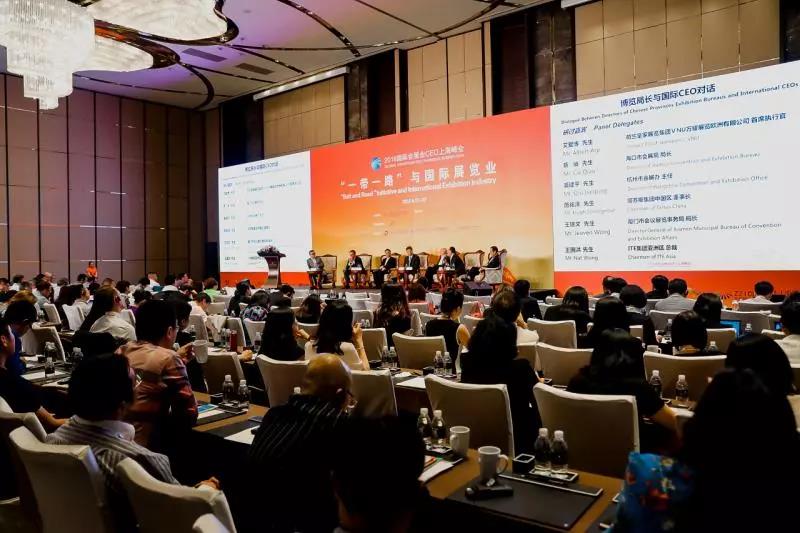
Time: Afternoon of June 21.
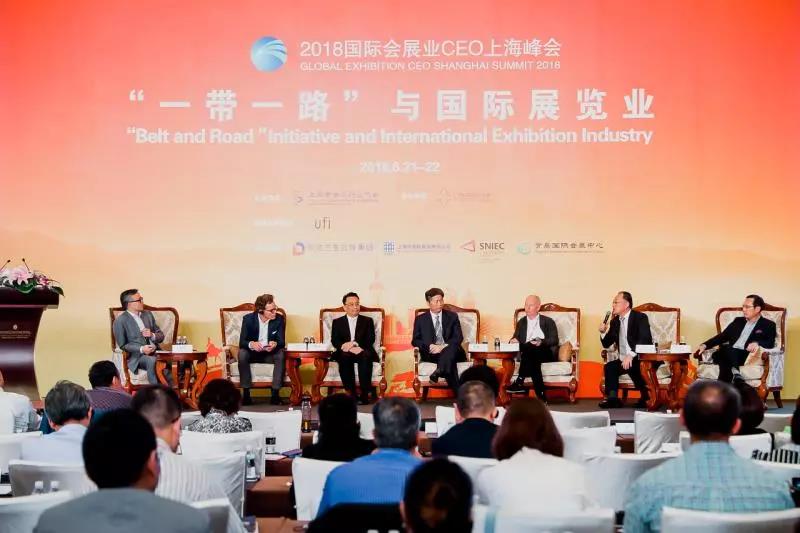
Panel Discussion: Dialogue between City Exhibition Bureau Directors and International CEOs, Part I
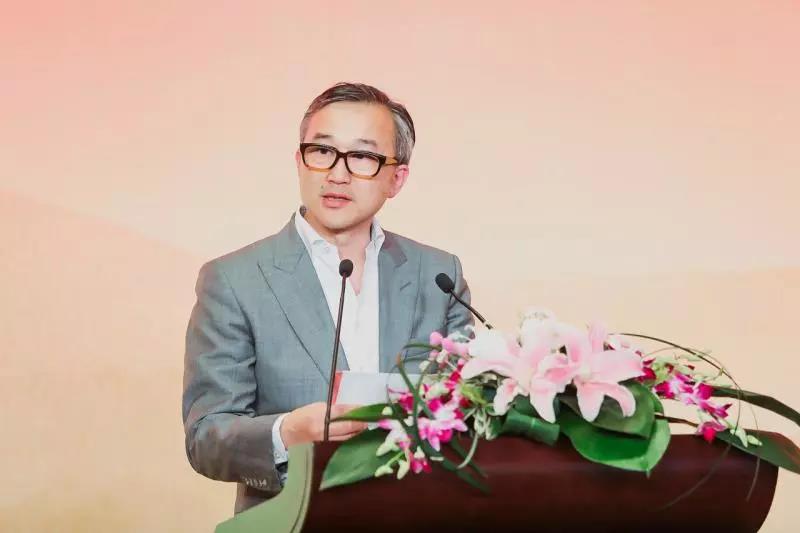
Moderator: Zhong Gang, President of Shanghai VNU Exhibitions Asia Ltd.
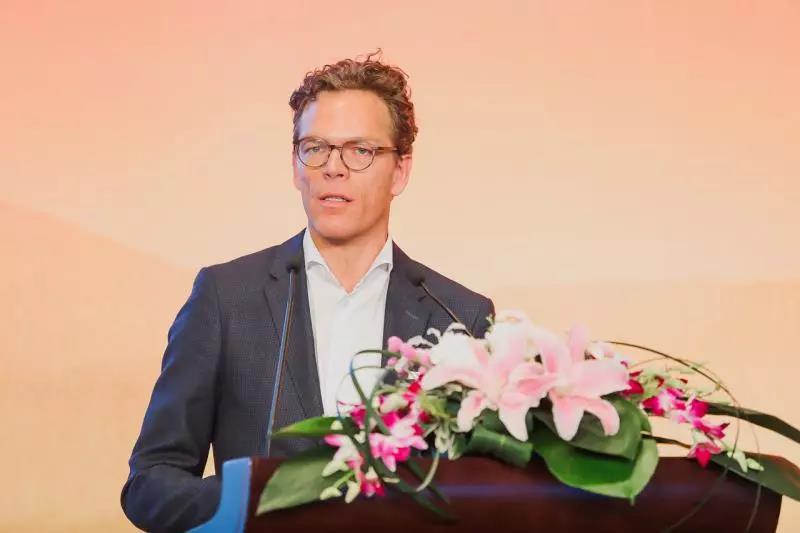
Panelists: Albert Arp, Chief Executive Officer of Royal Dutch Jaarbeurs VNU Exhibitions Europe; Cai Qiao, Director of the Haikou Convention and Exhibition Bureau; Qiu Jianping, Director of the Hangzhou Convention and Exhibition Office; Douglas Emslie, Chairman of Tarsus Group China; Wang Qiongwen, Director of the Xiamen Conference and Exhibition Affairs Bureau; Wang Guohong, President of ITE Group Asia.
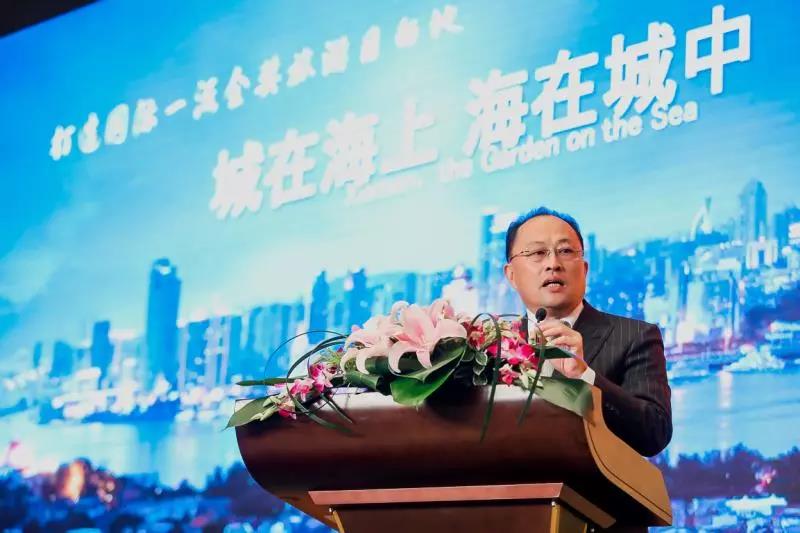
Zhong Gang: Many international companies have entered markets beyond Beijing, Shanghai and Guangzhou, and many local governments in China actively hope to internationalize and invite multinational companies to organize international exhibitions locally. I hope this dialogue can build a communication bridge between international enterprises and local convention and exhibition leaders.
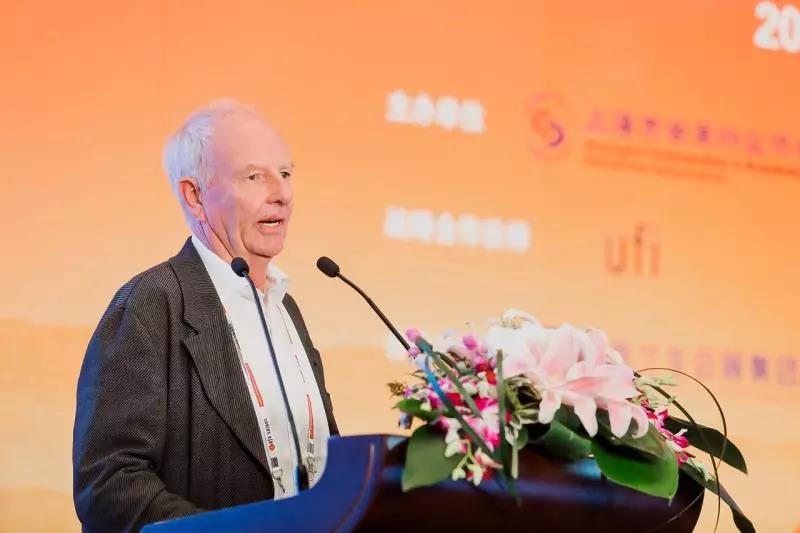
Albert Arp: When I was young, my parents took me to the circus. I was very interested in dragon dancing. I thought it was a difficult performance that required many people to work together: the head and the tail were controlled by different people, yet the performance created a perfect whole. It was excellent teamwork. That was my first impression of China.
Royal Dutch Jaarbeurs VNU was founded in 1917 and has a history of more than 100 years. It owns the largest venue in the Netherlands and plans to invest EUR 350 million between 2021 and 2025 to build new venues. In 2001, VNU entered the Chinese market, focusing mainly on four core areas: lifestyle, construction, technology and engineering.
In 2017, VNU used Shanghai as its core and implemented a five-year development strategy for its localized team. The first step was incubation and acquisition. Although this mode of development is not extremely fast, it is stable, and the past few years have proved that the strategy is completely successful. VNU has entered other cities through Shanghai and already has such a joint venture operating in Nanjing. VNU's criteria for selecting partners and the secrets of success are three points: trust, leadership and a sense of mission.
Cai Qiao: In terms of geographic location and climate, Haikou is very suitable for exhibitions and conferences. Haikou has proposed a strategy to build itself into China's Conference Corner. It already has first-class conference centers and exhibition centers, with complete surrounding facilities and strong support functions. Haikou's strengths are integrated services, sound coordination and effective implementation. If you bring Belt and Road-related international conference and exhibition projects to Haikou, you can enjoy very favorable support policies, and Haikou will certainly provide strong services. Holding meetings in Haikou means enjoying high-quality and efficient service.
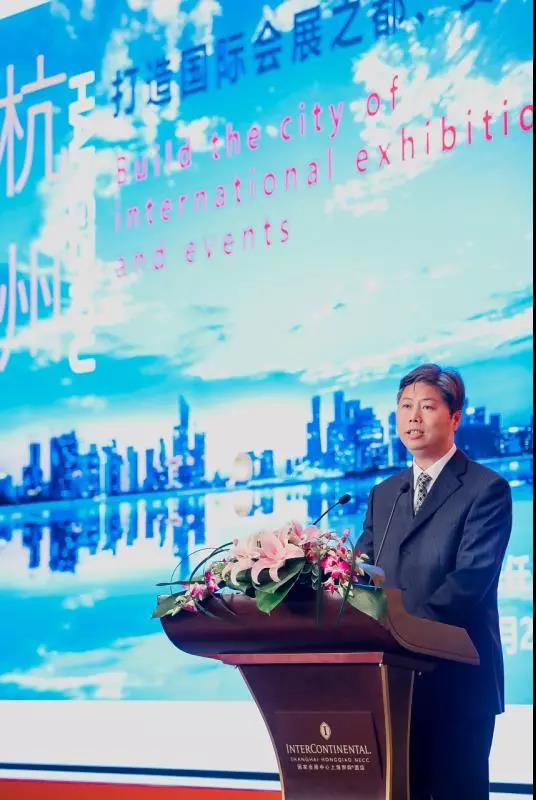
Qiu Jianping: For convention and exhibition authorities, going out means promoting Hangzhou's exhibition environment, while bringing in means inviting everyone to hold meetings and exhibitions in Hangzhou. In 2016, President Xi Jinping said at the G20 Hangzhou Summit that Hangzhou is a famous historical city and also an innovative city, one rich in Chinese cultural charm and broad international vision.
Hangzhou is an ecological and livable city. Forest coverage accounts for 65.5 percent of its area, and the average life expectancy of Hangzhou residents has reached 82.4 years, closely related to the city's environment.
Hangzhou is a scenic tourism city. In 2017, 4.02 million inbound tourists visited Hangzhou. It is one of China's seven ancient capitals with deep historical and cultural significance. It currently has two World Cultural Heritage sites: West Lake and the Grand Canal. In addition, the Liangzhu site in Hangzhou is applying for World Heritage status.
Hangzhou is a city of innovation and vitality. Its 2017 GDP reached RMB 1.2 trillion. The city is vigorously developing information industries, cultural creativity, financial services, tourism and leisure, health and fashion, and high-end equipment, all of which are trillion-yuan industries.
Hangzhou is strong in the private economy. Among China's top 500 private enterprises in 2017, 44 were based in Hangzhou.
Hangzhou is a city with a high quality of life. Residents have strong purchasing power, and the consumer market is very large, making it attractive for exhibitions.
Hangzhou is an originating city of China's convention and exhibition industry. The Hangzhou West Lake Expo held in 1929 was the first exhibition in Chinese history with the meaning of a modern expo. The West Lake Expo was resumed in 2000.
Hangzhou is a future international convention and exhibition destination. It has convenient transport, complete facilities, efficient government services and abundant talent. We welcome everyone to visit Hangzhou and hold meetings and exhibitions there.
Douglas Emslie: Tarsus came to China in 1993 and now has headquarters in both Shenzhen and Shanghai. Most of Tarsus's business in China is in these two places, and it also has related business in Chengdu. Tarsus has many partners in various sectors in China, mainly Shanghai INTEX and the Shanghai Council for the Promotion of International Trade, as well as the Chinese Musicians Association, Messe Frankfurt and the Consumer Technology Association.
How does Tarsus choose partners? First, we understand the partner before discussing business. This is very important. Any cooperation is like a long journey. As a Western company, Tarsus pays more attention to strategy, governance and financial systems. Our partners may have opposite ideas, depending on whether they are private enterprises or government departments.
When I first came to China, I came to Shanghai and met Mr. Chen Xianjin. Eighteen months later, we formed a joint venture with INTEX, and that joint venture has been very successful.
Our performance has been excellent. In more than 20 years in China, we have maintained high growth, largely because we have very good partners in Shanghai, Shenzhen and Hong Kong.
Strategically, Tarsus focuses on creating different cores in different cities and adapting to local conditions, such as in Shenzhen, Shanghai and Zhengzhou. We must seek common ground while respecting differences and understand each other's different personalities and cultures.
In terms of subject matter, Tarsus's strategy is not to rely on export expos, but on consumer exhibitions.
Although Chinese governments or exhibition companies have not yet invested in large overseas exhibition projects, this may be a huge growth opportunity in the future. We hope to cooperate closely with governments and see more such government departments help the exhibition industry develop.
Wang Qiongwen: Last year, during the BRICS meeting in Xiamen, the General Secretary pointed out that Xiamen is a high-quality city of innovation and entrepreneurship.
Xiamen's convention and exhibition industry has developed continuously along with reform and opening-up. Over the past five years, the number of exhibitions has grown by 85 percent and exhibition area has doubled. The city has hosted nearly 30,000 conferences and events of various kinds, continuously improving the overall quality of Xiamen's exhibition industry.
The Xiamen municipal Party committee and government attach great importance to the development of the convention and exhibition industry and to bringing in exhibition projects. The direction is to closely integrate the exhibition industry with Xiamen's industries, promote the formation of a pattern of major tourism, major commerce and major exhibitions, and in turn promote an industrial ecosystem in which economic trade, logistics, tourism, high technology and cultural creativity develop together.
In the development of the exhibition industry, we focus on four aspects. First, we emphasize international marketing; Xiamen is relatively advanced in preparing international marketing materials, building platforms and connecting resources. Second, we develop exhibition big data to promote integrated development between the exhibition industry and leading industries. Third, we improve Xiamen's exhibition hardware. Xiamen currently has 220,000 square meters of exhibition space and is also building an exhibition-industry complex outside the island with 300,000 square meters of exhibition area. Fourth, we improve the overall environment, mainly through exhibition legislation, comprehensive service and support, preferential policies and related measures.
We hope these efforts can help everyone here and, through you, attract more convention and exhibition projects to Xiamen.
For Xiamen, exhibitions are mainly independently cultivated, while conferences are mainly attracted from outside. In recent years, we have independently cultivated nearly 100 landing projects, and we also look forward to transplanted exhibition projects taking root in Xiamen.
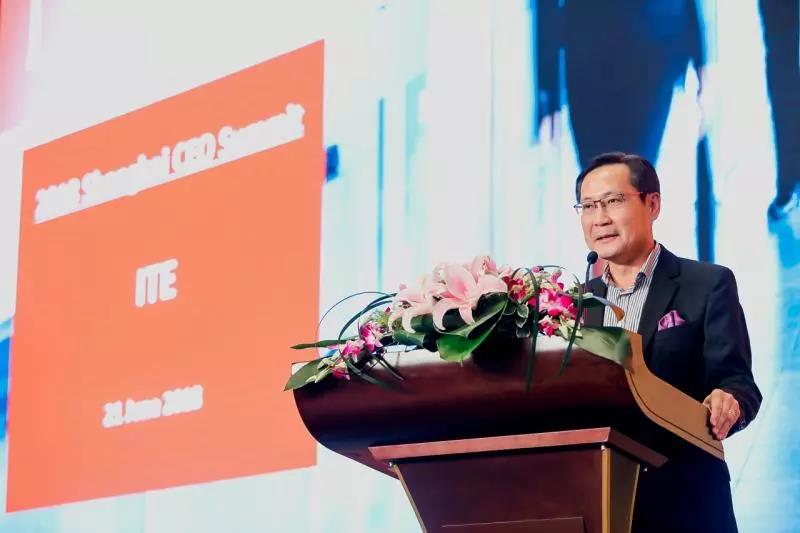
Wang Guohong: Exhibitions are about finding and obtaining opportunities. ITE was founded in 1991 against the background of the dissolution of the Soviet Union, which opened the Russian market. ITE began exhibition business in Russia and is now the largest exhibition group in Eastern Europe. Since its founding, it has created more than 250 exhibitions and has more than 30 offices and subsidiaries worldwide.
ITE's new strategy is transformation and change. In the first year we faced many challenges, and now we have entered the second year of growth. After stabilization and integration, ITE has also made acquisitions, recently acquiring five leading exhibition brands.
In the future, ITE will continue entering different markets, expanding the industries covered by exhibitions and the scale of exhibitions on the existing foundation, and obtaining many leading branded exhibitions through acquisitions. At the same time, ITE is considering how to bring these leading exhibition brands into China.
Beijing, Shanghai, Guangzhou and Shenzhen are already very crowded. ITE will consider entering second- and third-tier cities, which means we will look for more opportunities to bring our brands to those cities.