Time: Morning of June 21.
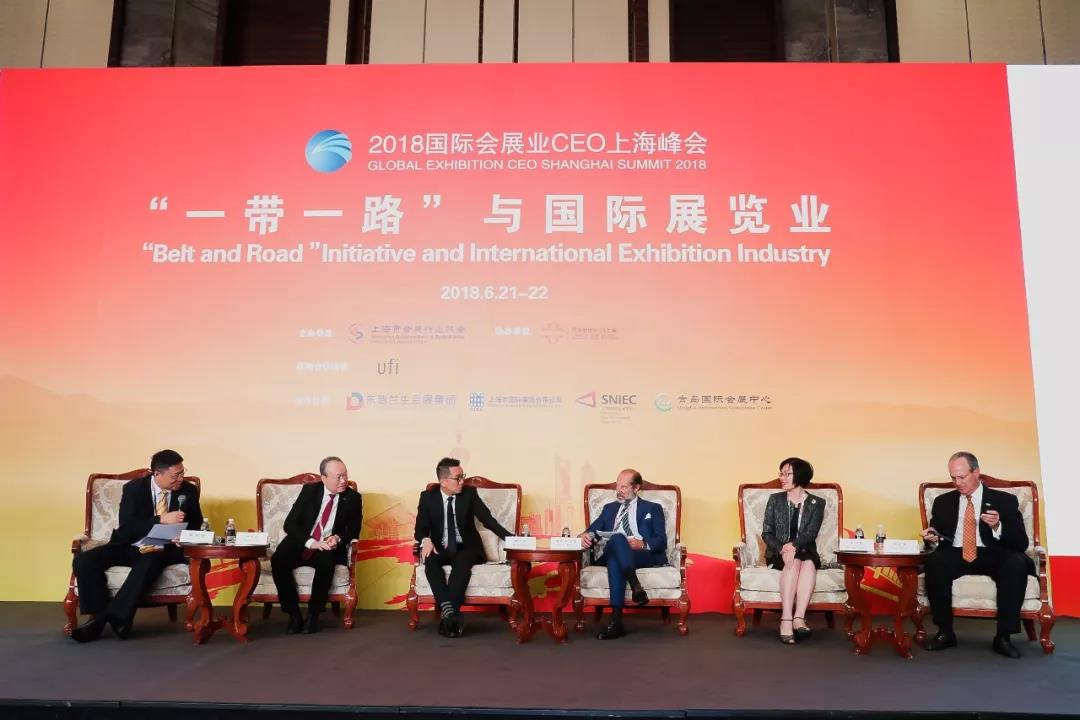
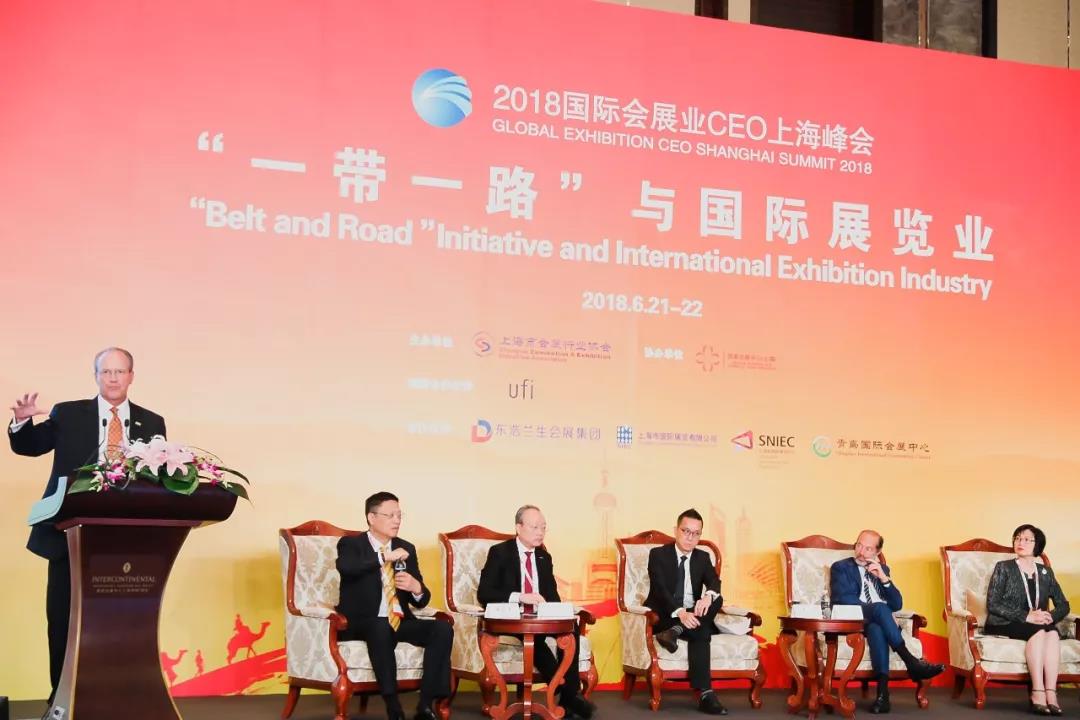
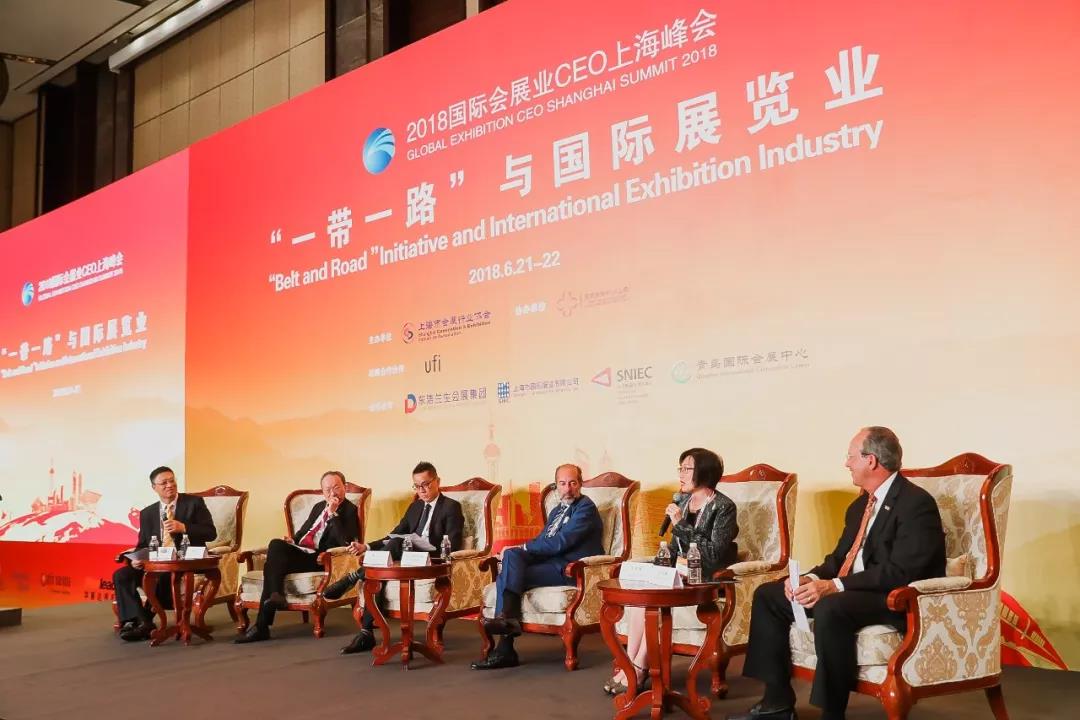
Panel Discussion: Opportunities and Challenges for the Exhibition Industry under the Belt and Road Initiative
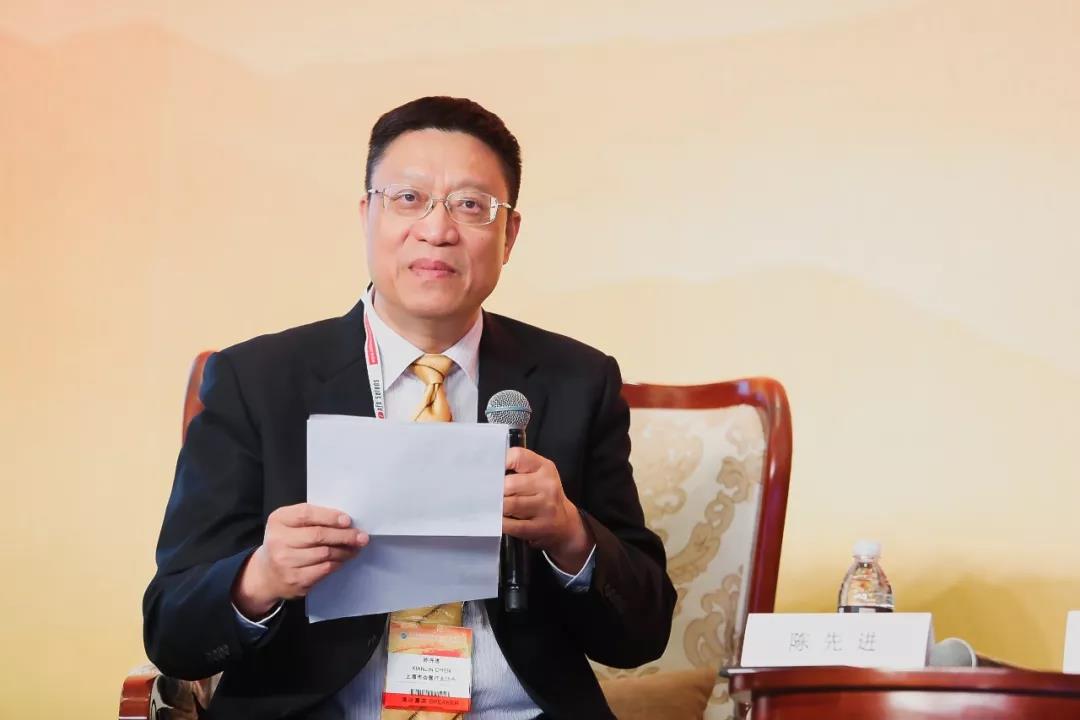
Moderator: Chen Xianjin, President of the Shanghai Convention and Exhibition Industries Association.
Panelists: Vincent Lim, President of the Malaysian Association of Convention and Exhibition Organisers and Suppliers; Andrew Phua, Executive Director of Exhibitions and Conferences, Singapore Tourism Board; Ettore Riello, President of the Italian Exhibition and Trade Fair Association; Nichapa Yoswee, Senior Vice President of the Thailand Convention and Exhibition Bureau; David DuBois, President and CEO of the International Association of Exhibitions and Events.
Discussion Highlights
Chen Xianjin: I would like the five guests to talk about your understanding of the Belt and Road Initiative proposed by China, and, based on the realities of your own countries, what plans, actions and results have already emerged in exploring the Belt and Road.
Nichapa Yoswee: The Thai government has planned a new economic zone, the Eastern Economic Corridor, with 13,000 square meters of space and possible completion in 2022 or 2023. The Eastern Economic Corridor has very favorable tax policies, including income-tax exemptions for up to 15 years, personal income tax of only 17 percent, land leases of up to 50 years, and the possibility of applying for an additional 49 years. Through railway links from Pattaya to Bangkok and then by high-speed rail to Kunming, the corridor will run through the Southeast Asian rail route along the Belt and Road and open new investment and trade channels.
In the Eastern Economic Corridor, support plans for the convention and exhibition industry have already been placed on the national agenda, and all levels of government provide strong support for the industry.
In Thailand's list of new exhibitions for 2018, 11 were held in Thailand, including two from China. I summarize my message in three keywords. First, thanks: thank you to China for the Belt and Road Initiative, which provides us with a huge platform. Second, invitation: on behalf of the Thailand Convention and Exhibition Bureau, I invite you to organize exhibitions in Thailand. Third, cooperation: we will do everything we can to help you use Thailand as a platform to enter broader Southeast Asian and ASEAN markets.
David DuBois: Trade was born more than 3,000 years ago. Now in 2018, there are many kinds of exhibitions everywhere, and with them come many forms of trade. We need to bring buyers and sellers together, and the Belt and Road Initiative provides such a historic opportunity. There are 65 countries along the Belt and Road, and the global exhibition industry is therefore being driven to present the industrial strength and cultural characteristics of these 65 countries. In North America, we still do not know what impact the Belt and Road will have, but if we continue to strengthen bilateral trade, companies from the United States, Mexico and Canada can hold exhibitions in China or cooperate more internationally. IAEE will support work that has a positive impact on world development.
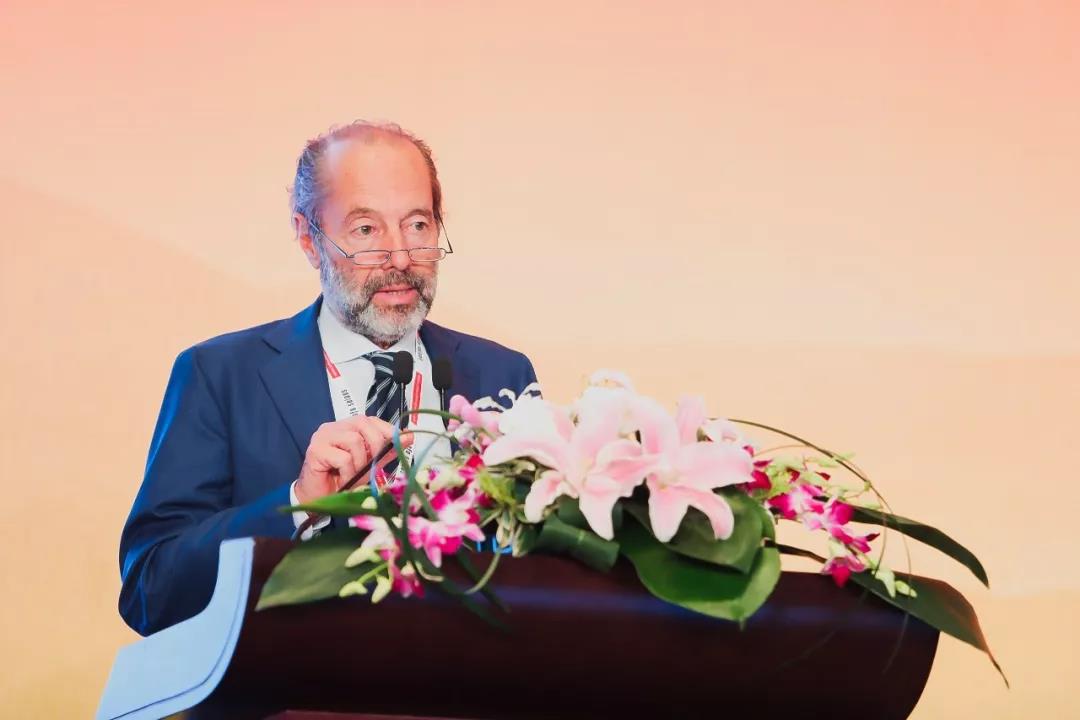
Ettore Riello: The Belt and Road Initiative is very important. Through it, we can create a closer environment for cultural cooperation. In 1978, I already believed that if we wanted to cooperate with China, we first had to understand Chinese culture. Connectivity in facilities allows us to quickly build bridges between different cultures.
The countries we represent all have strong interest in the Belt and Road, but we must pursue win-win outcomes. Italy has a very strong exhibition industry chain. We have 35 convention and exhibition centers. Most exhibition companies are not large, but they are highly creative. We hope to further advance relations with China. We believe connecting people, culture and infrastructure is the first step, and summits like this should continue to be held to promote bilateral exchange and development.
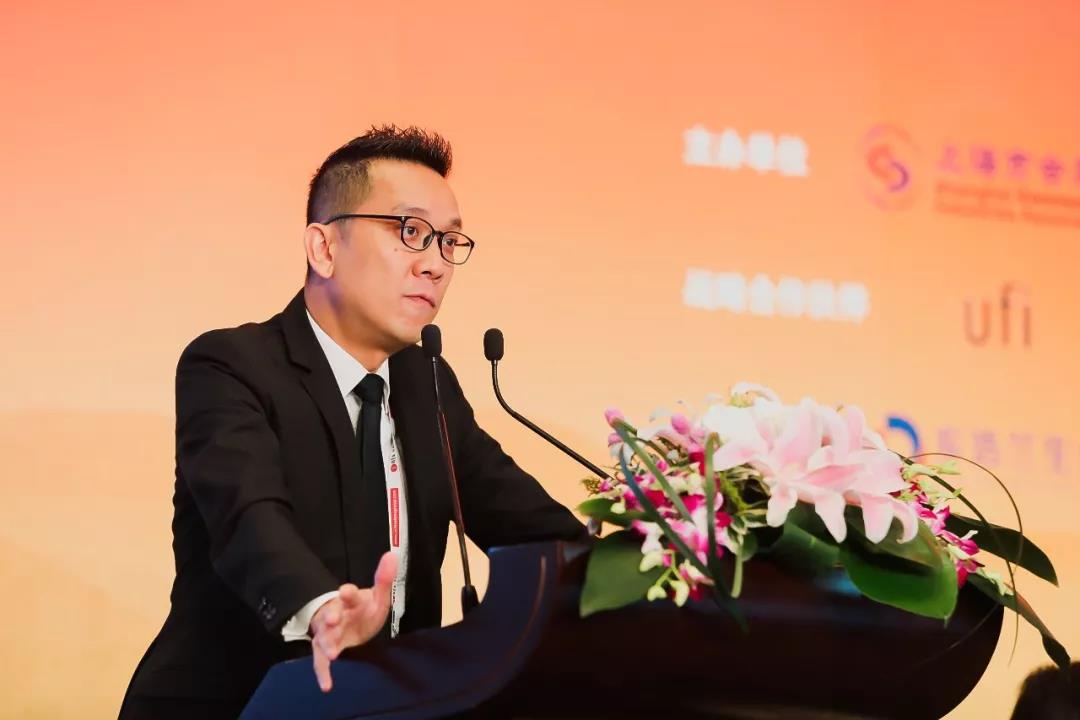
Andrew Phua: Singapore has grown from a small fishing village into an international trade center. It has become a hub connecting East and West, with highly developed transportation. In conventions and exhibitions, we have strong financial and legal services.
Singapore is the largest offshore RMB clearing center. Sixty-seven percent of ASEAN settlement or financing services are conducted through Singapore. In legal services, Singapore is a neutral platform that can resolve trade frictions through mediation and arbitration, with the purpose of avoiding direct legal confrontation in the end.
Exhibitions and conferences are also part of our global platform. I hope everyone can see Singapore's future role in the Belt and Road. I hope you will visit Singapore and use Singapore to open the path to ASEAN.
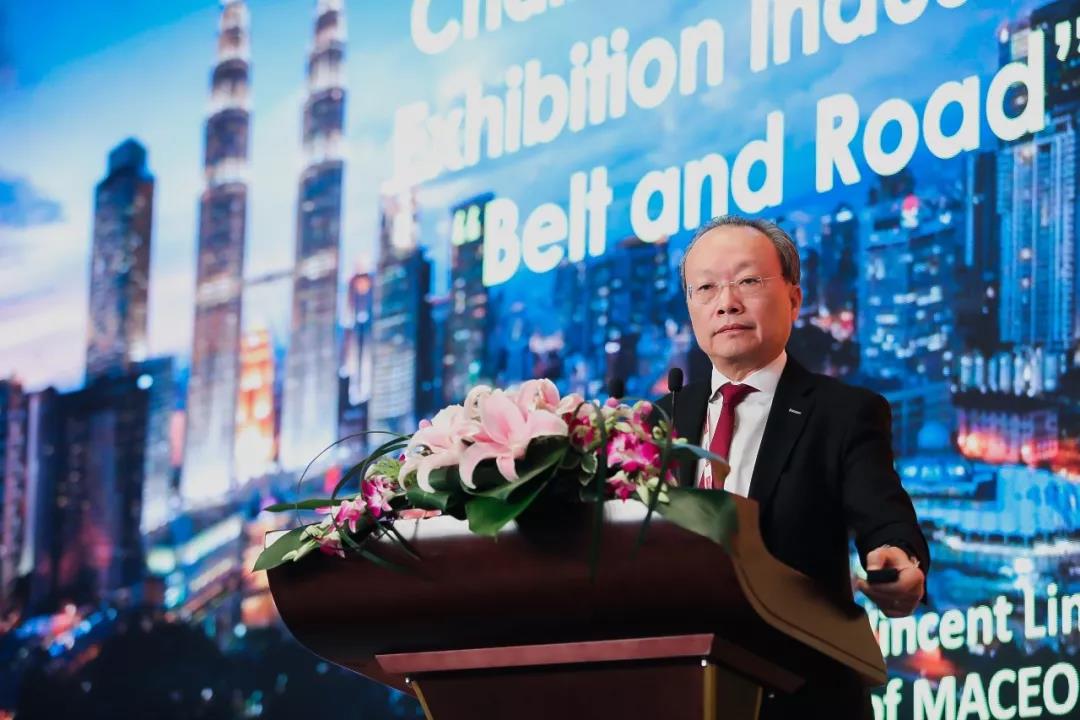
Vincent Lim: To pursue win-win outcomes, cities along the Belt and Road should build partnerships. Can we establish an exhibition-industry alliance among countries along the Belt and Road?
On the Maritime Silk Road, Malaysia is an excellent transit port. The port of Malacca is convenient, and we also have the East Coast Rail Link and East Coast Expressway under construction, both Belt and Road projects. Malaysia's new government attaches great importance to the rail link and expressway. Once completed, they will be very important for connectivity and growth and will also benefit the exhibition industry.
Malaysia's halal industry is widely recognized in Muslim countries. We will expand the market size of the halal industry, develop it as an industry, and export to halal and non-halal countries along the route. Halal exhibition organizers have already considered entering the Chinese market. China has 26 million Muslims, and we hope to bring related catering and halal products to China through exhibitions.
Chen Xianjin: At the end of the day, the convention and exhibition industry is a platform industry. The platform itself does not necessarily produce products, but it can facilitate transactions between two or more parties. From the perspective of platforms, please each use one or two sentences to discuss how the exhibition industry and the Belt and Road can be integrated.
Nichapa Yoswee: As a platform, an exhibition can play at least four roles. First, it transmits content, provided that the content is true and credible. Second, it helps communication, so organizers must design platforms for connectivity and communication well. Third, it builds communities with content, connections and communication. Fourth, it enables cooperation, including cooperation among different parties, cooperation among different organizers, and public-private cooperation. These are all directions for the exhibition industry today.
Ettore Riello: Exhibitions give people an opportunity to touch a product in person. Once on site, people often feel that everything must be done by themselves, so support from the broader social system is very important. In the exhibition industry, we must have strong strategies and maintain close contact with the market in order to operate the platform well. We often see that exhibiting countries have different cultures and industries have different backgrounds, and these require us to invest energy.
Andrew Phua: We have heard many ideas about the Belt and Road, and it brings many economic benefits. For conferences, business events and exhibitions, the first point is that we can play an important transformational role in the Belt and Road process. The second is connectivity. People often think the Belt and Road only refers to basic logistics infrastructure, but connectivity is not only about logistics and goods. It also includes digitalization, people-to-people exchange and cultural communication.
David DuBois: I may have a different view. I have not finished reading all the materials, and I do not know whether the Belt and Road has considered workforce development and skills. There must be sufficient labor to support Belt and Road development. If we want to succeed, we must consider the labor market and attract more talent into our industry.
Vincent Lim: The Belt and Road may be the largest infrastructure project in the world since the Great Wall. I think in modern society it is an admirable and astonishing project. I want to offer three summary points. First, the Belt and Road is mainly about connectivity, and one role of the exhibition industry is to serve as a connection platform for buyers and sellers. Second, collaboration. Third, sharing of funds. We need to study what win-win and multi-win strategies mean so that everyone who participates can benefit and achieve an effect greater than the sum of separate parts.