
The essence of the exhibition industry is an industrial platform, and its basic function is sharing. Exhibitions share exhibits and the industrial information behind them. Conferences share facts and views. For any exhibition or conference activity, excitement is the form, while sharing is the core. Previously, we shared with readers the Key Points from the 2017 International Exhibition Industry CEO Shanghai Summit. Starting today, we will publish the Key Points from the 2016 International Exhibition Industry CEO Shanghai Summit every Monday. Please stay tuned.
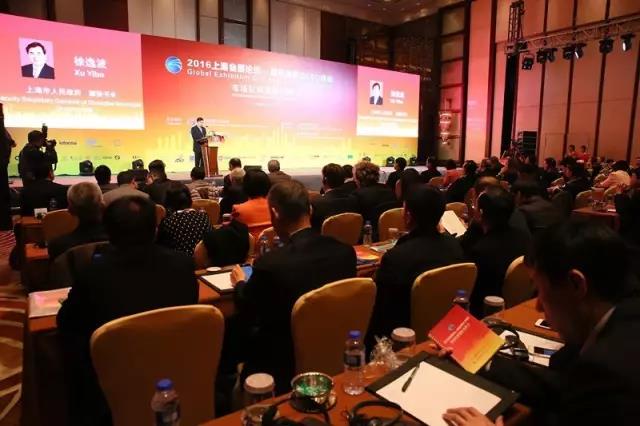
Key Points from the 2016 International Exhibition Industry CEO Shanghai Summit, Part One.
From January 11 to 12, 2016, the 2016 International Exhibition Industry CEO Shanghai Summit, co-hosted by the Shanghai Convention and Exhibition Industries Association and the Shanghai Convention and Exhibition Promotion Center, was held at Kerry Hotel Pudong, Shanghai. With the theme of market orientation and international competitiveness, the summit included five topics. During more than 20 meetings and exchange activities over two days, 33 international industry leaders, well-known entrepreneurs and association leaders shared views on the development of China's exhibition industry with nearly 290 C-level senior managers from exhibition enterprises and institutions in 16 countries and regions. The key points of the speakers' remarks are published below.
Topic One: Drawing on International Experience to Accelerate Local Enterprises' Going Global and Internationalization.
The internationalization of Chinese exhibition enterprises has developed together with reform and opening up. State Council Document No. 15 clearly sets out specific requirements for Chinese exhibition enterprises to go global: greatly improving the capability to organize and operate exhibitions, significantly enhancing voice and influence in the international exhibition industry, and cultivating a group of well-known branded exhibitions with international competitiveness. This topic aims to draw on useful experience from multinational enterprises, follow the development laws of the exhibition industry, and discuss how Chinese exhibition enterprises can actively understand global exhibition industry trends, plan paths for going abroad and entering international markets, and cultivate well-known branded exhibitions with international competitiveness against the background of the global economic platform and China's comparative industrial advantages.
There were six speakers for this topic: Chet Burchett, CEO of Reed Exhibitions; Li Jinqi, chairman of China Foreign Trade Centre Group; Jochen Witt, founder of JWC; Sergey Alexeev, UFI President for 2016; Stephen A. Carter, CEO of Informa Exhibitions; and Pan Jianjun, chairman of Shanghai International Advertising and Exhibition Co., Ltd.
1. Key Points from the Speech by Chet Burchett, CEO of Reed Exhibitions
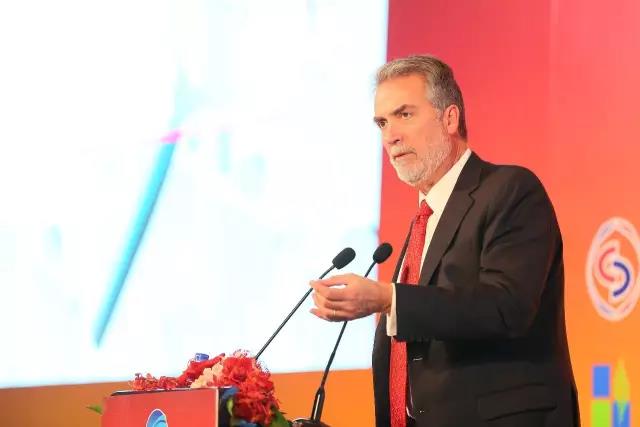
Going abroad is absolutely a very good thing and has been a strategy that Reed has pursued over the past two decades. We have companies in 34 countries, operate in more than 40 countries, and hold more than 500 exhibitions each year. For us, global expansion is definitely beneficial. But the key question is not how to go abroad, but why go abroad. Entering a new market through internationalization involves risks. Therefore, we must first be clear about why we should take that risk.
To enter a new overseas market, one must provide new value to the local market. First, understand local market trends and the unmet needs of local customers, so as to enhance customer value and create a better experience for them. Second, build unique innovation potential, competitive advantages and comparative advantages, and prove that you are different. Third, understand the business model for entering that market. Do not assume that models successful in your own country can be replicated everywhere else. Instead, change according to customer needs.
If you want to promote an event or a business globally, first pay attention to brand leverage, maximize brand value, reflect understanding of existing customer needs, and show the value brought by new customers. Second, choose local partners. Bring something new into the partnership, understand differences in local markets and cultures, and do local marketing well. Finally, attach importance to localization of business talent.
2. Key Points from the Speech by Li Jinqi, Chairman of China Foreign Trade Centre Group
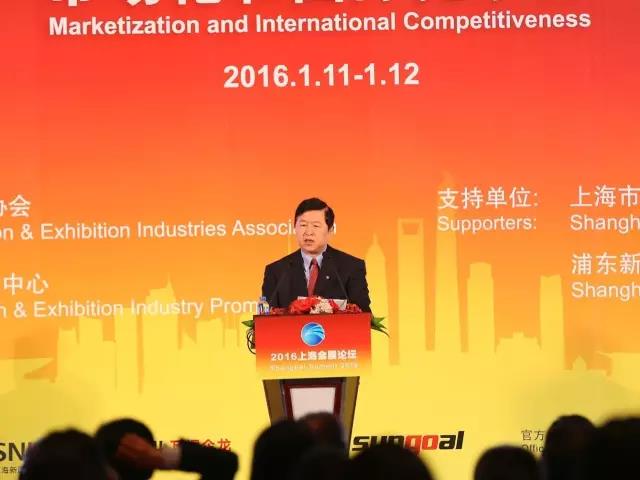
Economic globalization has promoted deep integration between China's economy and the world economy, and has also greatly improved the internationalization level of China's exhibition industry. To enhance the development and internationalization of China's exhibition industry, it is necessary to change methods and actively innovate: shifting from scale growth to quality and efficiency improvement, from path-dependent development to innovation-driven development, and from independent development to cooperation and win-win results.
Whether state-owned enterprises or foreign-invested enterprises, all should make full use of domestic and overseas resources. Foreign exhibition companies can acquire Chinese exhibition projects. State-owned exhibition enterprises can develop mixed ownership and cooperate with private and foreign-invested enterprises, and acquire overseas exhibition projects. Sino-foreign joint venture exhibition enterprises can also leverage their respective advantages, organically combine international resources with Chinese market opportunities, connect international and domestic markets, and pursue joint development.
3. Key Points from the Speech by Jochen Witt, Founder of JWC
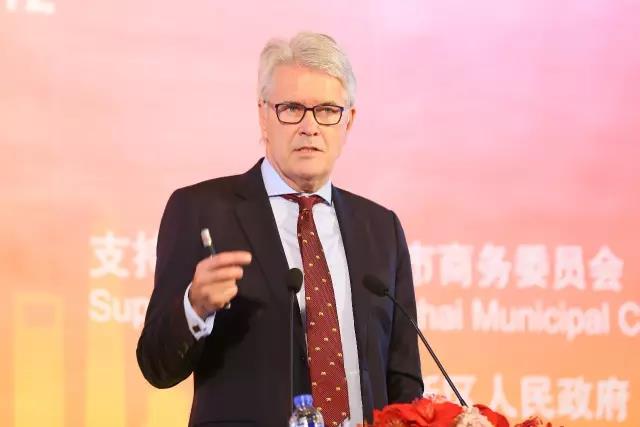
Globalization means extension of original brands or creation of new brands, and can be operated through mergers, joint ventures and licensing. For Chinese companies, first it is necessary to understand and evaluate new markets. Second, develop products and brands. In addition to proprietary brands, it is also necessary to study how to develop new events and integrate brand management globally. Third, study the full operation process, including pricing, communication, channels, talent, and delivery of products and services. If Chinese companies want to establish overseas market partnerships, they need to consider whether the strategy is suitable, including corporate culture, equity structure, key customers, whether they fit the new company's structure, and whether contractual rights in cooperation can be effectively controlled.
For Chinese companies, extending original brands or creating new brands abroad is, in my view, less likely to happen in the U.S. or European markets, and more likely to happen in younger markets such as Africa and Southeast Asia. If Chinese enterprises enter Europe or North America, they are more likely to merge with or acquire local exhibitions and exhibitors.